Professional-Grade Gluten Free Flours | Vegan & Allergy Friendly | Australia-Wide Delivery


· By R2R Team
Is Baking Soda Gluten‑Free? The Simple Answer (Plus Tips)
When you have a gluten-free diet, or when you are coeliac, you understand that it does make a difference to look at every ingredient on the list, even those that might appear to be safe. So, is baking soda gluten free? Here's the simple answer: yes. Baking soda (sodium bicarbonate) is gluten-free, and it is pure. It is not a grain-based chemical compound but a mineral-based one; it has no wheat, rye, barley, or any other gluten-based compound in it.
However, this distinction is where it matters. “Naturally gluten-free” and “coeliac safe” are not necessarily the same. The actual danger lies in its processing, not in the ingredient itself. This difference can be understood as the reason between a safe bake and a reaction-triggering bake.
There is a question that many home bakers pose before commencing a recipe, and the answer is simple, yet only under the condition that you will know what to look for on the label, namely, is baking soda gluten free. At Gluten Free World, we believe that gluten free baking should never be a guessing game. Let's break it all down.
The Cross-Contamination Risk (Why "Pure" Isn't Always "Safe")
➥ Shared Facilities
Although sodium bicarbonate is gluten free, most commercial preparations of baking soda are prepared at the same plant, even on the same lines, with wheat flour and other gluten-containing materials. This presents a significant risk of cross-contamination, especially for individuals with coeliac disease or high gluten sensitivity.
Cross-contamination may occur either in the manufacturing process or even in storage. The presence of microscopically detectable gluten is sufficient to cause an immune reaction among coeliac disease patients, and thus, the production setting is as essential as the ingredient list. So while baking soda gluten free has a simple "yes" as its answer, what goes on behind the scenes in manufacturing is what every coeliac baker needs to stay aware of.
➥ How to Stay Safe
-
Look for "Certified Gluten-Free" labels on your baking soda packaging. This certification implies that the product is tested and confirmed not to have more than 20 ppm (parts per million) of gluten in it.
-
Avoid bulk bins at health food stores or supermarkets. Open containers and shared scoops are hotspots because different products, such as gluten-containing ones, can be cross-contaminated.
-
When in doubt, contact the manufacturer directly to ask about their facility practices and allergen controls.
Choosing a certified product is the single easiest way to protect yourself without overthinking every bake.
Baking Soda vs. Baking Powder: The "Hidden Gluten" Trap

This is one of the most common points of confusion in gluten free baking, and it is one that can genuinely catch people off guard. People who are new to a gluten-free lifestyle often ask is baking soda gluten free at the same time as they ask about baking powder, and the two have very different answers.
➥ Baking Soda
The baking soda is composed of one ingredient, sodium bicarbonate, in its pure form. Nothing else. Because it contains no additives, fillers, or starches, the sodium bicarbonate gluten free status holds true in its pure form. When you purchase a product that is labelled 100% baking soda (bicarb soda), then you are purchasing a product that contains only one substance and no concealed ingredients.
This is exactly why baking soda gluten free gets a confident 'yes' when you are buying pure, certified baking soda.
➥ Baking Powder
Baking powder is a mixture. Its ingredients include baking soda, an acid (usually cream of tartar), and a starch filler that keeps the ingredients separated. It is in the starch where the latent gluten danger lurks.
➥ The Risk
Wheat starch is also employed as the anti-caking filler in baking powder in certain countries, such as parts of Europe and Asia. If you pick up a generic baking powder from your supermarket shelf and assume it is coeliac safe, you could be wrong. Always read the label. Seek baking powder with the filler being cornflour or potato starch; these are gluten-free solutions.
As much as there is a very straightforward answer to the question is baking soda gluten free, the same cannot always be said of baking powder. This difference is important whenever you are baking.
Tips for Successful Gluten-Free Baking
The first thing is to be sure that your ingredients are safe. The second step is to get the science right. This is what you should know to be able to bake using baking soda.
➥ The Acid Test
Baking soda cannot act alone, and it needs an acid component to react and form bubbles of carbon dioxide that make the baked goods rise. Examples of common acids used in gluten free baking are buttermilk, lemon juice, apple cider vinegar, yoghurt, and brown sugar. Baking soda will impart a soapy, bitter flavour to a finished product without adding acid.
➥ The Right Ratio
More is not always better. One of the rules of thumb is 1/4 teaspoon of baking soda to 1 cup of gluten-free flour. Gluten-free flours already work differently from wheat flour, and this ratio is critical to the attainment of the appropriate texture and rise. Excessive amounts of baking soda may result in a metallic taste and a firm, flat product. Once you have confirmed is baking soda gluten free and picked the right certified brand, nailing the correct ratio is the next most important step to a successful bake.
➥ Freshness Check
Old baking soda will not rise, which means your bakes will not rise either. To check whether yours is still in operation, put 1/2 teaspoon of baking soda with a splash of vinegar. In case it fizzes at once, it is still satisfactory. When the response is minimal or non-existent, then it is time to change it.
This is a useful step that is particularly important in gluten free baking, in which achieving the right rise is already harder than with a standard wheat-based recipe.
➥ Flour Pairing

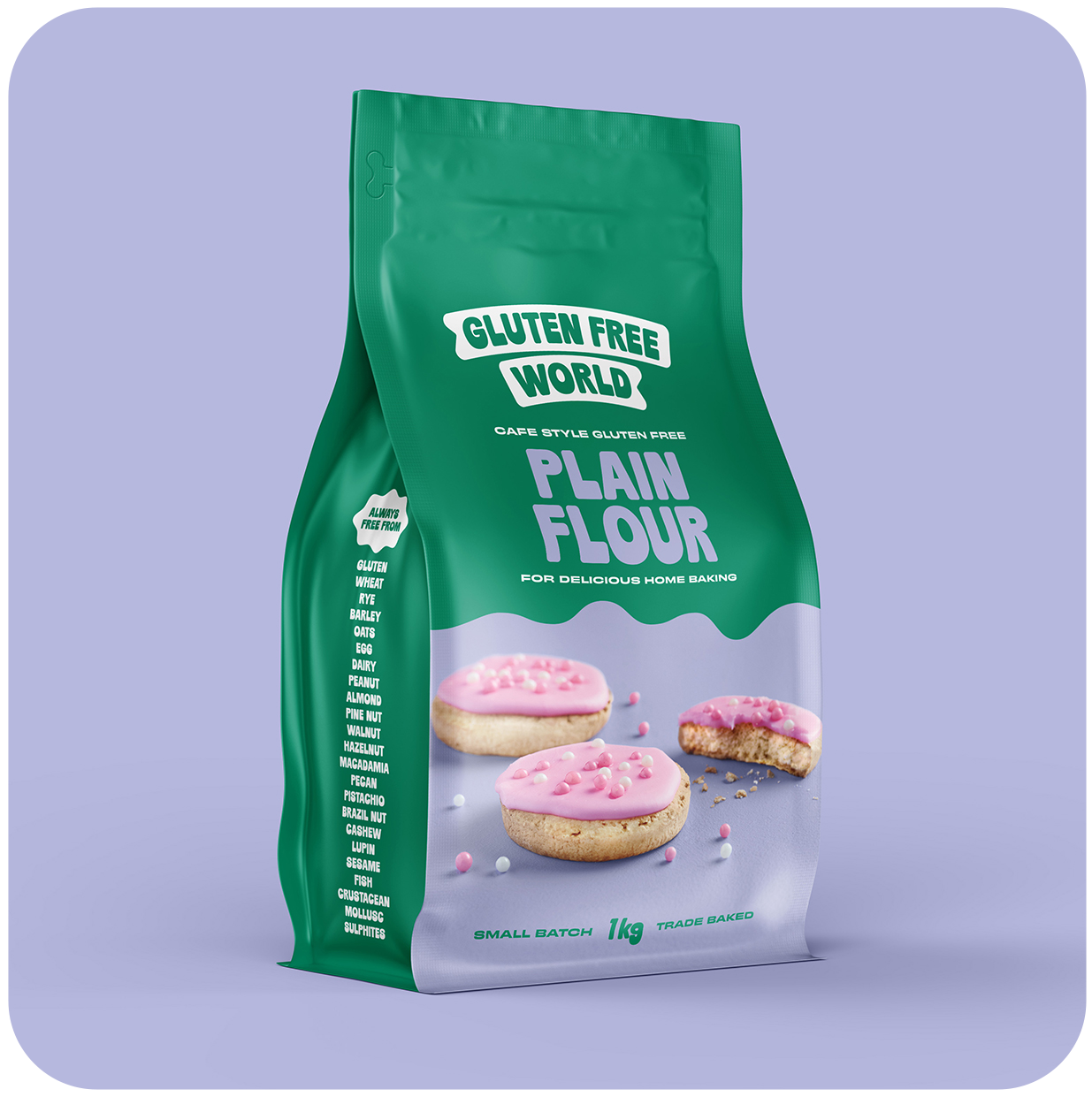
Baking soda is ideal when used in combination with a good, well-balanced gluten free flour mix. Our Plain Flour at Gluten Free World is triply tested and specially developed to interact with raising solutions such as baking soda, which provides your baked goods with optimal drive, framework, and consistency. A plain flour that is properly blended, rather than plain rice flour or plain almond flour alone, gives the correct ratio of proteins and starch that baking soda needs to perform its function correctly.
By taking the Gluten Free World flour blends with certified baking soda, you are eliminating the trial and error in coeliac safe baking. Our products are created to ensure that the home baker achieves the desired outcome without sacrifices and that they rise well, taste delicious, and are actually safe to eat, using breads, muffins, pancakes, and cakes.
Conclusion
Pure baking soda is gluten-free, and the sodium bicarbonate gluten free status is universal in all reputable certified brands. To a person who is used to asking the question of is baking soda gluten free, yes, it is, but there is one big condition: one should always ensure that it is certified and handled in a special facility. It is the concealed risk of gluten in certain baking powders and cross-contamination in the production process that needs to be taken into consideration, rather than the substance itself.
It is easy, safe, and quite fun to find certified products, read labels, and match your leavening agents with high-quality and gluten free baking.
📞 Contact us today and bake with total confidence!
Frequently Asked Questions
Is baking soda gluten-free?
Yes, is baking soda gluten free is one of the most searched questions among coeliac bakers, and the answer is clear: Baking soda (sodium bicarbonate) is inherently gluten-free. It is a mineral-based compound that contains no grain-based ingredients. Nevertheless, to eliminate cross-contamination, you should always ensure that your brand is handled in a special or certified facility.
Can I use baking soda for coeliac disease?
Yes, but only when it has been made in a special or certified gluten-free facility. To be sure that the packaging has passed the necessary standards of safety, look at the label on the pack that should have “Certified Gluten-Free”. This certificate qualifies it to be coeliac safe when used in baking. If you are still wondering is baking soda gluten free when buying for a coeliac household, the certified label is your best confirmation.
Can I swap baking powder for baking soda?
The answer is no, they are not interchangeable. The baking soda is approximately 3–4 times stronger than the baking powder. Baking soda, too, needs an acid to work, and baking powder combines an acid within itself. Replacing one with the other without ratios will lead to an increase in the taste of your baked goods.
Does baking soda contain corn or grain derivatives?
No. Pure baking soda contains 100% sodium bicarbonate and no fillers, starches, or grain-based additives. This ingredient is in contrast to baking powder, which often contains an anti-caking agent of either cornflour or rice flour and, in some instances, wheat starch. Baking powder labels should always be checked, whereas pure baking soda is clean.
Can I use baking soda for cleaning if I have coeliac disease?
Yes. Using baking soda for household cleaning is completely safe for people with coeliac disease. You are not consuming it as a mineral compound; it is a low-risk substance. Should you be very sensitive to air particles, then simply make sure that the working environment is properly ventilated when dealing with them in powder form.
