Professional-Grade Gluten Free Flours | Vegan & Allergy Friendly | Australia-Wide Delivery


· By R2R Team
Gluten‑Free Puff Pastry: Lamination Tips Without Gluten
Puff pastry is not only one of the most technically challenging things you can prepare in a kitchen, but to do it gluten-free? That puts the bar even higher. The question of how to achieve the magically thin and only-sky-high puffs of gluten free puff pastry has baffled home bakers over the years: How in the world do you achieve those layers that are supposed to be impossible to achieve?
The answer isn't magic. It's a method.
At Gluten Free World, the mission had always been to eliminate the guesswork in challenging bakes. Laminated. Café-grade, flaky pastry can be created at home without any issues, but you have to know what you are dealing with and adhere to a disciplined procedure. This blog walks you through the full picture: what lamination is, how to select the appropriate gluten free pastry dough base, and how to solve the most common problems.
Let's get into it.
What is Lamination?
➢ Definition
Lamination is the process of folding cold fat, known as 'beurrage', into a base dough called détrempe, creating hundreds of alternating layers of fat and dough. When baked, those layers produce the signature flakiness you see in croissants, Danish, and puff pastry.
The keyword is 'cold'. The lamination is only successful when the fat remains solid during the process of folding. When the butter melts into the dough instead of between the layers, you lose those thin sheets, and instead of light, layered pastry, you end up with greasy, flat results.
➢ The Science of the "Puff"
This is what is actually taking place in your oven: as the pastry heats, the water contained in the butter turns into steam. This is because the steam pushes between layers upwards, and hence the pastry rises and separates, and then the fat solidifies the structure permanently.
-
Key fact: Pastry can be raised 2-4 times its height by being properly laminated. There is nothing but technique that lifts it.
Without gluten, the dough has no natural elasticity to help it hold those layers together. That is why the type of flour mixture you use, as well as the additives that you incorporate in gluten free puff pastry, mean a lot more than in regular baking.
The Foundation: Choosing Your Flour Blend

What you use in your decision-making is the most crucial choice. All gluten free plain flour blends do not laminate. You want something that can roll without breaking, something that can fold without disintegrating, and something that can bake without falling.
➢ Recommended Products
We stock flour blends that are specially designed to perform in the demanding types of bakes, such as this one:
-
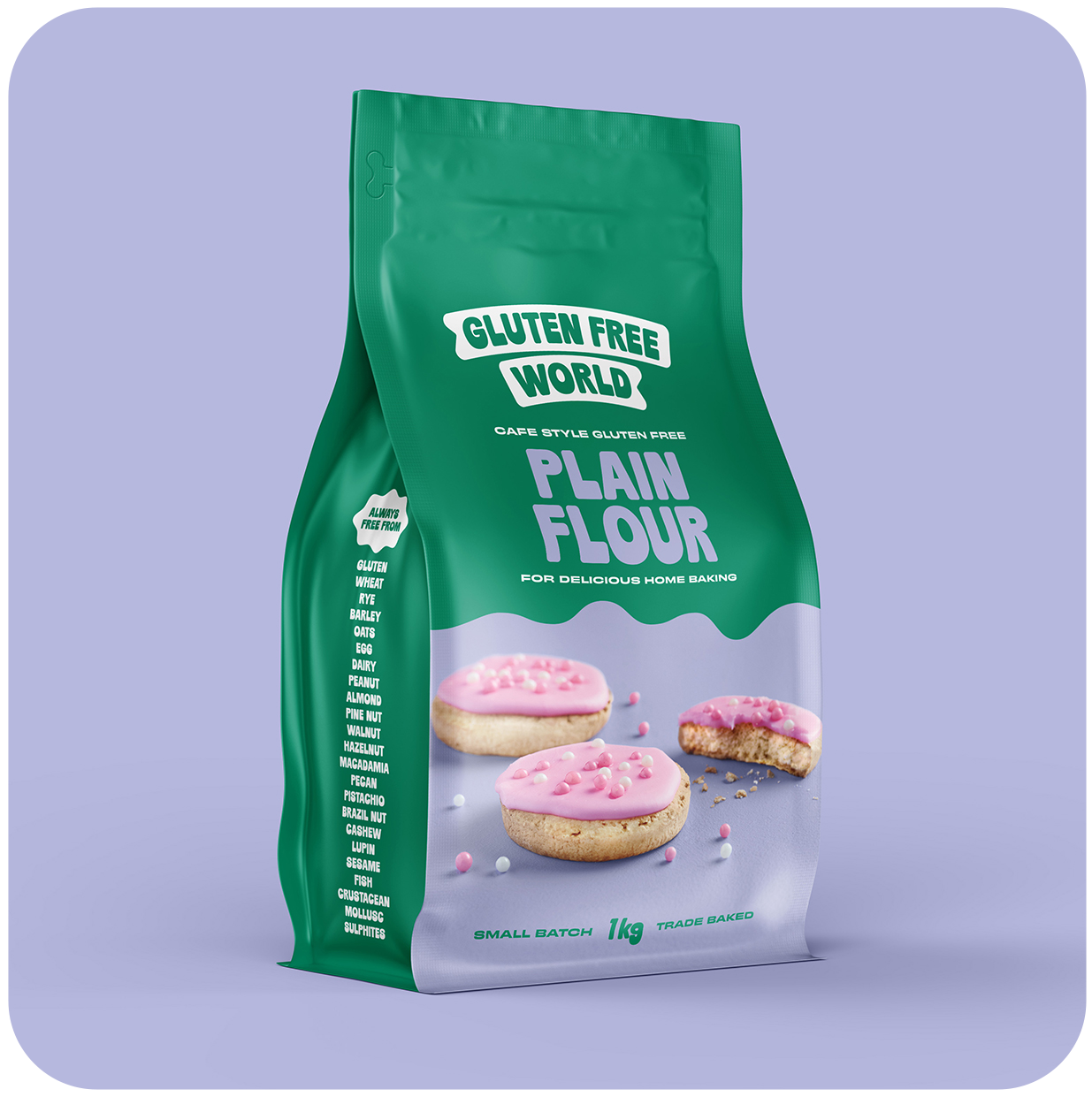
Plain Flour: This is an all-purpose gluten free plain flour mixture that is versatile and does not become too hard or too sticky to do the delicate rolling process. It provides you with control at all folds, which is what lamination requires.
-
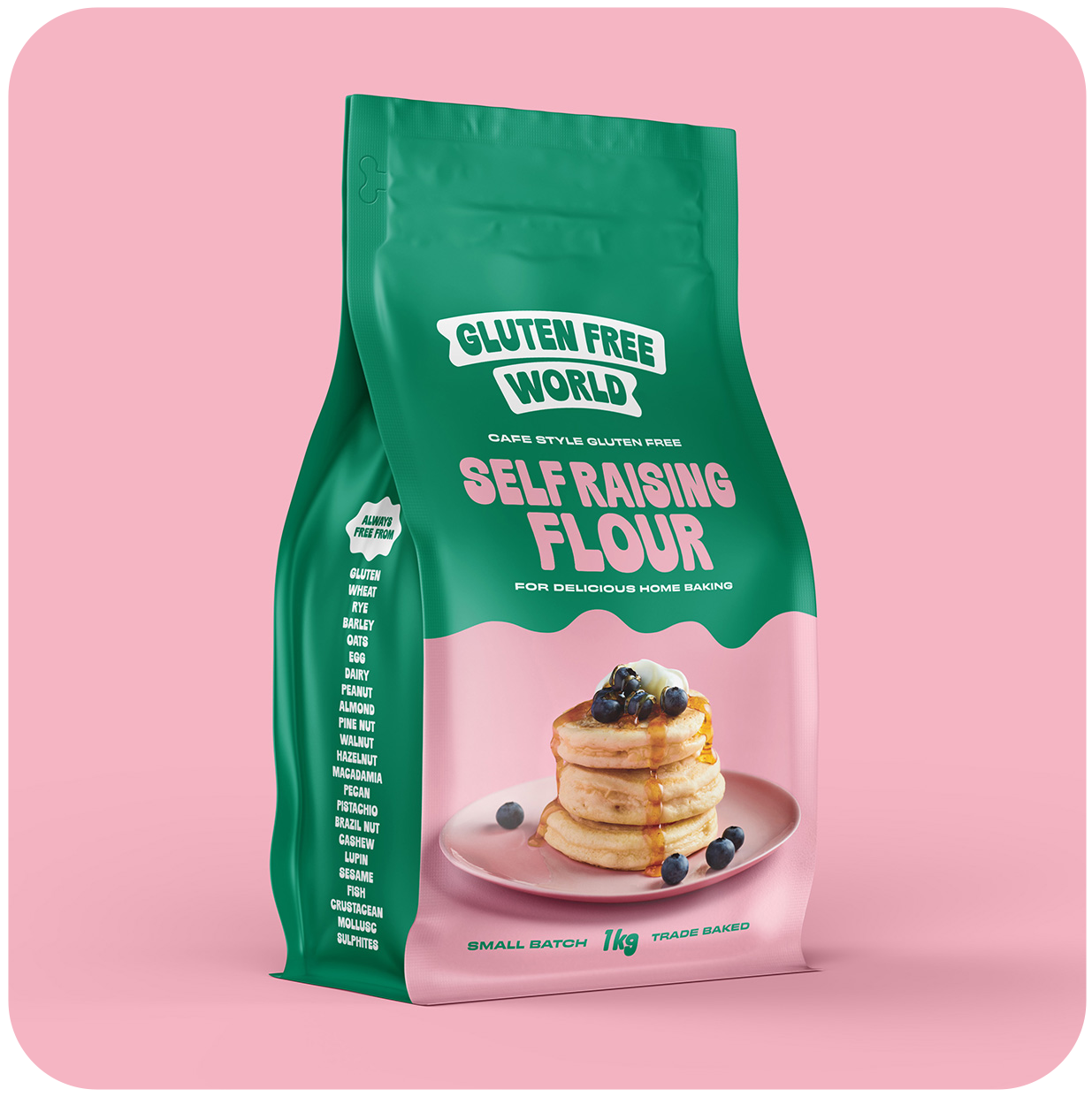
Self-Raising Flour: The gluten free self raising flour choice is perfect when you need a slightly lightened base for a recipe or are taking over an existing recipe requiring a leavened détrempe. It provides a light lift in combination with a steam-powered puff during baking.
-
Note: When you are just starting out laminating, you can start with a gluten free self raising flour, which can help provide your pastry a performance boost, especially when your number of folds is still being perfected.
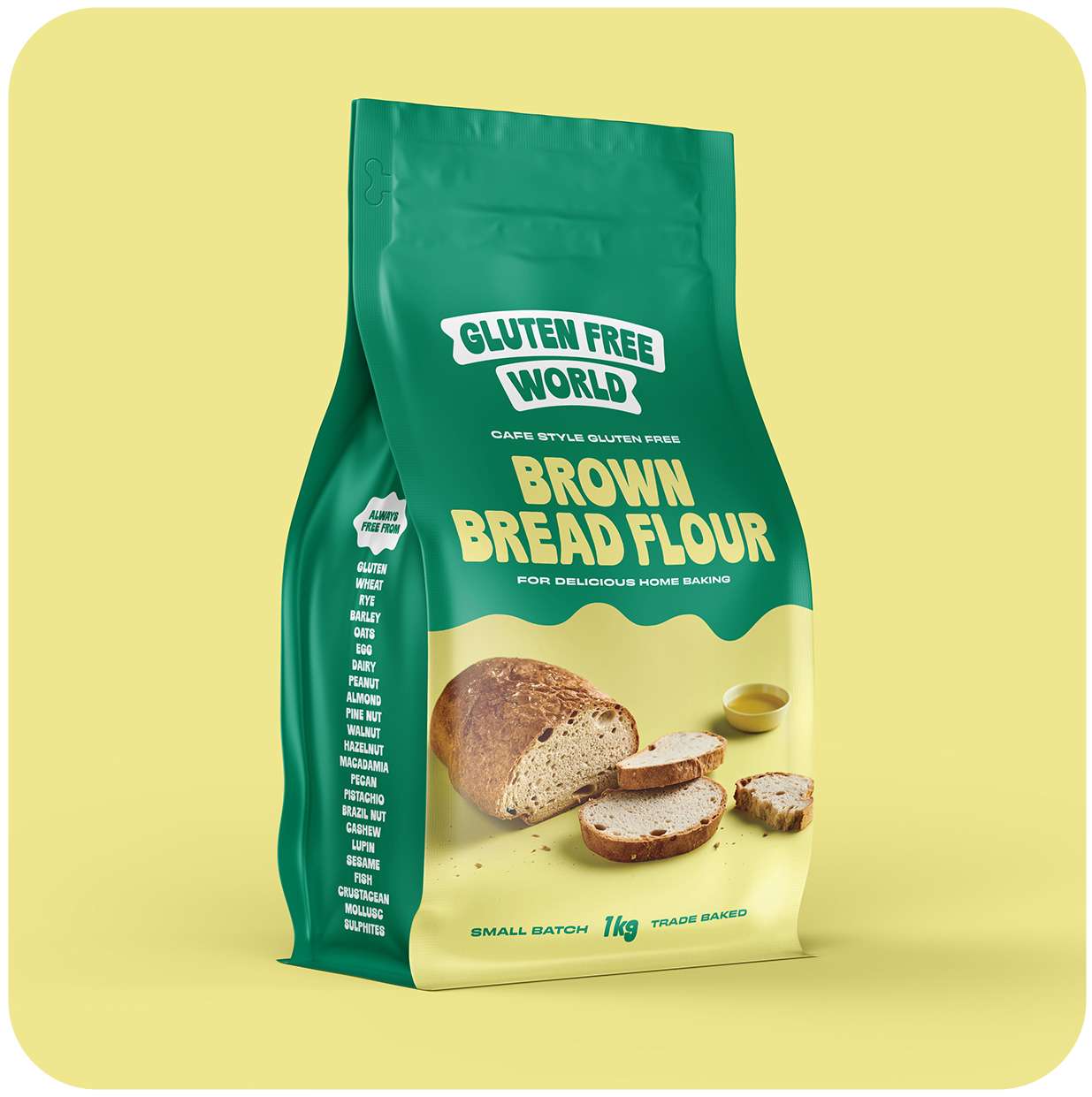
In more sophisticated or higher gluten laminated doughs, the gluten free bread flour blend of Gluten Free World gives extra body, making it a solid option for bakers wishing to get the baked product to more closely resemble standard wheat-based pastry. Gluten free self raising flour is also a safe fallback for a lighter and faster building, which consistently yields a delicate, well-risen finish.
➢ Essential Additives: Xanthan Gum
This is non-negotiable. Xanthan gum is the one that takes the place of the stretch that gluten would provide when dealing with gluten free pastry dough.
In the absence of xanthan gum, the dough cracks when folds are made instead of being squeezed; the result is tears and breaks, which entirely ruin the layer structure. Even a small amount, about one-half teaspoonful of flour per 200 g, is sufficient to provide the dough with the elasticity necessary to endure repeated rolling and folding without disintegration.
When you are using xanthan gum in a gluten free bread flour blend, be sure to check the label to see whether it has already been added. An excess would produce a gum-like, sticky feel that can never be removed through lamination.
Professional Lamination Tips
The three uncompromising tenets to get gluten free puff pastry right include temperature regulation, uniform folding, and how much to fold. These are mastered; the layers will come.
➢ Temperature is King
Cold is not some mere implication but the whole principle. Use butter that has a minimum of 82% fat levels. More fat translates to less water in the butter, and as such, this will minimise the chances of the butter breaking or smearing in the dough during the folding process.
Keep everything cold throughout:
-
Wipe down your bowl, rolling pins, and working area in case your kitchen is hot.
-
Regularly (after every two folds), wrap the dough in cling film and leave it in the refrigerator for 15-20 minutes.
-
At any stage, in case the dough seems soft or greasy to the touch, then stop. Chill immediately and do not wait until it is hard again.
The temperature sensitivity of gluten free dough is higher than that of wheat doughs since the gluten structure is missing, allowing the fat to soften. A single warm fold can unfold several cold ones.
➢ Mastering the Fold
➨ Single (Letter) Fold
With gf puff pastry, the Single or Letter Fold is better. You take the dough and fold it in thirds, like a letter into an envelope. This produces a reduced number and thicker layers per fold, which is actually ideal for gluten-free lamination.
Why? Since the layers of GF pastry are thinner and therefore more likely to compress and “squash” together under their own weight, particularly in the absence of gluten to maintain each sheet of pastry in a taut state. The Letter Fold maintains your layers clearly defined and visible, and this directly translates to lift in baking.
➨ The 90-Degree Turn
Rotate the dough 90 degrees before any additional fold. This is to make sure the layers are stacked uniformly in every direction, and it should not cause the dough to be too hard in a particular direction. Missing this step results in more puffing on one side and flat pastry on the other.
➢ The "Six Turn" Rule
Stop at six turns. This is the professional norm of gluten free puff pastry, and surpassing it is an active way of destroying what you have created. The more folds one makes following the sixth one, the thinner and weaker the layers will be until they start to blend, and the end pastry is completely depersonalised.
Six folds will be sufficient to make you a good, even puff. More is not better here.
Discover Our Full Gluten Free Product Range
Shop with confidence. See full product info, certifications, and the best Gluten Free Flours for your next bake.
Troubleshooting: Why Your Pastry Didn't Puff
Issue: Butter Leaking in the Oven
-
Cause: The dough was either too hot when it was put in, or the ovens were not hot enough.
-
Fix: Gluten free puff pastry should always be baked at least at 200°C (400°F). The high temperature is what causes the steam to develop fast before the butter can even melt. In case your oven is cool, set an oven thermometer and adjust it.
Issue: Dough Cracking During Folds
-
Cause: The dough is either too cold or not hydrated enough.
-
Fix: The dough should be allowed to rest at room temperature for no longer than 5 minutes before rolling. This bends it sufficiently to bend without breaking. In case the cracking continues, then add a teaspoon of cold water to your gluten free pastry dough and rework it again.
Issue: Flat, Heavy Pastry
-
Cause: The pastry was cut with a dull knife before baking.
It is an eye-opener, but an important one. The layers are physically closed with the dull blade passing over the edge of the dough. Once baked, the steam has no place to escape, and the pastry cannot rise.
-
Fix: When cutting, a very sharp knife is always used and cut in a straight-down motion in one hit. Never drag, never saw. In case of cutting shapes, resharpen or replace the blade between cuts.
Why Choose Gluten Free World for Gluten Free Puff Pastry

Lamination is a method where the margin of error is low, and the quality of your ingredients will give you just as much margin as you have.
Our products undergo a triple test for bakes like this. The gluten free plain flour, gluten free self raising flour and gluten free bread flour blend that are being offered on our website are designed to act predictably under the pressure, precisely what lamination requires.
Beyond the flour, Gluten Free World is founded on one concept: that being gluten-free does not imply making a sacrifice. The same philosophy is applied to gf puff pastry, a pastry that, with the proper base, can actually stand up and compete with one made with wheat.
Conclusion
A gluten free puff pastry made at home is one of the most satisfying projects one can undertake as a home baker. Patience, cold hands and an appreciation of the process are required, but not much of it is out of reach.
Keep your dough cold. Use quality fat. Select the appropriate gluten free plain flour or gluten free bread flour blend. Master the Letter Fold. Stop at six turns. And when anything goes amiss, it will, at first, take it as data, not a failure.
Muscle memory can be created through practice, as can that flaky, golden, café-quality pastry.
📲 Shop our triple-tested flour range on our website and recreate the café experience at home today. For any difficulties, contact us and resolve them quickly
FAQ
Can I make this dairy-free?
Yes. Make certain that you use a firm vegan block of butter, rather than a soft tub. It is the fat content and hardness of the butter that make lamination work, and soft vegan spreads do not maintain their structure between folds. Hard vegan blocks perform significantly like traditional butter and yield consistent results.
Can I freeze the dough?
Yes. After you are done with making your folds, wrap the dough in cling film and freeze it for up to a period of 2-3 months. Refrigerate overnight, then bake. Do not leave it at room temperature because this may cause the butter to warm unevenly and interfere with the layers.
What is the difference between "Rough Puff" and "Traditional"?
Traditional gluten free puff pastry incorporates a solid block of butter (beurrage), which is folded into the base dough in a highly organised procedure. Rough puff is quicker; cold lumps of butter are added to the flour, and this will give a marbled effect, which will still make layers, but with less definition. They can be used with gf puff pastry, but traditional provides better lift.
Can gluten free dough be laminated?
Definitely, but the regulations are stiffer. Gluten free pastry dough does not tend to reseal itself in case it tears, as regular dough does. When you start to laminate, the dough and the block of butter should be approximately the same temperature. When one is much colder or warmer than the other, the butter will either crack or smear, and neither should give good layers.
Do you laminate puff pastry?
Yes, puff pastry is the most iconic laminated dough. Croissant and Danish doughs are also laminated, and gluten free puff pastry is the place where the lamination technique can be noted most and has the greatest effect. And nail it here, and all the bakes laminated become more convenient.
