Professional-Grade Gluten Free Flours | Vegan & Allergy Friendly | Australia-Wide Delivery


· By R2R Team
Gluten-Free Sourdough: How to Get a Proper Rise and Tang (Even in Winter)
Sourdough baking is a labour of love, but once you've eliminated gluten and lowered the kitchen temperature in winter, a good rise and the delicious sour tang may seem nearly impossible. You repeat the same process as in the summer but end up with a dense, flat, and unflavoured loaf.
This is because the traditional wheat sourdough uses a gluten network to hold gas generated by wild yeast. That's not the case with gluten free sourdough. It's based on starch hydration and wild yeast vitality to perform the same function, which slows down significantly in cold weather. A sluggish starter combined with the wrong flour blend is a reliable recipe for failure, regardless of your skill level.
It's in this blog that you will learn how to play with temperature, moisture and your flour to ensure you get a light, airy crumb and rich, complex flavour, even in winter. No guesswork, no vague tips. Only the right modifications that make a difference.
Understanding Gluten free Sourdough

Unlike wheat dough, Gluten free sourdough does not stretch. There is no gluten network to form extensible walls that can support the carbon dioxide bubbles. Rather, gas retention is only possible when a hydrated starch matrix (a gel) is formed as the starches absorb water and swell. If that matrix is too firm, too moist, or if it has not been sufficiently fermented, the whole structure collapses.
That is what makes it difficult for most home bakers to start baking a gluten free sourdough recipe. They use a general-purpose gluten-free flour mix, apply a standard wheat sourdough process and are surprised by the crumbly, dense and flat loaf.
-
The Role of Flour
These are general-purpose gluten-free flour mixes which are intended for cake, cookie and batter-making. They have no quality starches or protein levels or dietary fibres that form the structure needed for bread. If used in a sourdough recipe, the dough is unable to retain the gases created during the fermentation process. The outcome is a loaf that has a dense, scone-like texture, rather than the open and airy crumb you are looking for.
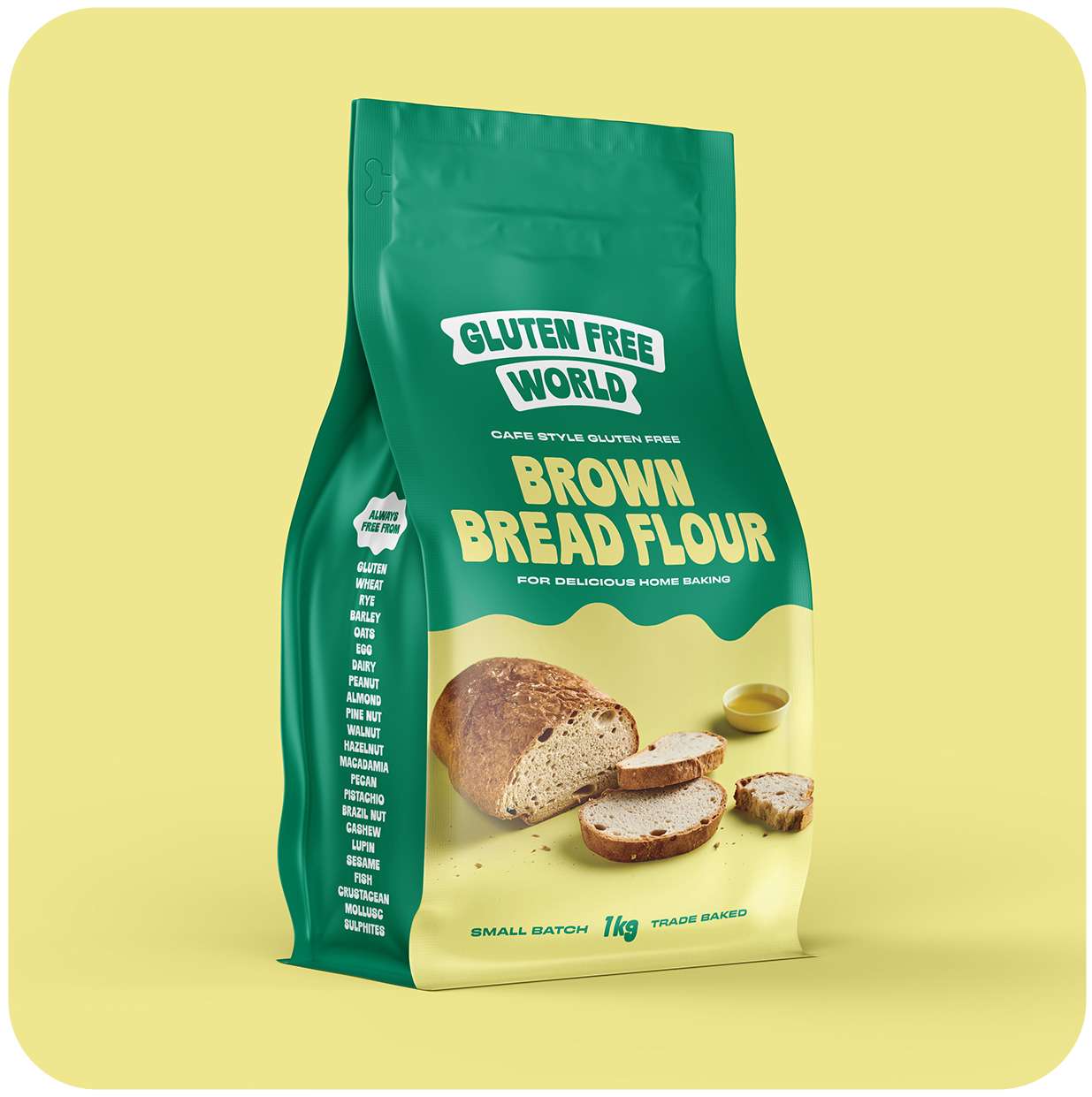
The solution is simple: just use a special gluten free sourdough bread flour blend. A quality bread-specific blend contains a calibrated ratio of whole grains, starches, and binders that work together to trap wild yeast gases without collapsing. Our traditional bread flour and gluten free brown bread flour are formulated to do just that, providing the structure and hydration balance that general-purpose flours cannot.
-
The Hydration Factor
Gluten free sourdough flour blends are highly absorbent. They require a lot more water than wheat flour to make the dough less dense and easier to work with. If you have dough that is clay-like and stiff, it is definitely under-hydrated. Changing the amount of water you use is one of the biggest changes you can make to your gluten free sourdough recipe.
Discover Our Full Gluten Free Product Range
Shop with confidence. See full product info, certifications, and the best Gluten Free Flours for your next bake.
How to Get a Proper Rise and Tang
-
For a Proper Rise
A proper rise in gluten free sourdough bread is not just about the starter being active. It requires warm, consistent temperatures throughout both bulk fermentation and the final proof. Winter kitchens work directly against this, often sitting between 14°C and 18°C, well below the 24°C to 28°C sweet spot that wild yeast thrives in.
-
Warm Proofing
Never leave your gluten free sourdough to proof on a cold bench. In cold conditions, fermentation slows, and you get a very flat loaf with little flavour. Rather, locate the warmest stable area in your house. These are all excellent places to put the refrigerator: the top of the refrigerator, inside an oven with only the light on, or near a heating vent. Consistently maintain bulk fermentation between 24°C and 28°C. Use a thermometer; guessing temperature is one of the most common sources of inconsistency in gluten free sourdough bread baking.
-
The "Esky" Trick
One of the most useful and underutilised winter-proofing hacks is the Esky (cooler box). Put the shaped gluten free sourdough into a banneton or loaf tin and then into a large cooler. Pour some water (just boiled) into the mixing cup, then cover and set aside to proof. The walls are insulated, which keep the heat and moisture in, and you will have a DIY proofing chamber for free. Change hot water once an hour if necessary. This method is a very effective way to ensure proofing temperatures are in range, with no special equipment required.
-
Flour Choice: Use Gluten-Free Traditional Bread Flour and Brown Bread Flour

The flour you use directly determines whether your gluten free sourdough can rise at all. A blend formulated for bread, not cakes or general use, provides the starch-to-grain ratio needed to form a strong matrix that holds gas during the long, slow winter fermentation.
Gluten Free World's Traditional Bread Flour and gluten free brown bread flour are blended specifically for this. Wholesome flavour depth and extra dietary fibre are provided by the gluten free brown bread flour, which also offers the necessary structural performance to ensure an accurate rise. One of the significant factors in gluten free sourdough baking is removed by using purpose-built flour.
For Classic Sour Tang
Sourness in gluten free sourdough comes from lactic and acetic acid produced by the bacteria in your starter during fermentation. The trick to getting the most tang is to allow those bacteria time and the proper conditions to do their job, and winter often rushes or stalls this process at the worst moments.
-
Use a Seedling Mat
One of the best investments a gluten free sourdough baker can make is a seedling heat mat. It is placed under your starter jar and will provide a constant cool temperature of around 20°C to 24°C, which will ensure bacterial activity is even throughout the night. A consistent temperature means consistent acid production, which translates directly into a more reliable, tangy Gluten free sourdough flavour.
-
Lengthen Cold Proofing
To develop a deep sour flavour, counterintuitively, cold proofing (taking the shaped gluten free sourdough bread and putting it in the refrigerator overnight) is one of the best methods. Bacterial acid production goes on at a slower rate, while yeast activity is inhibited at low temperatures. The loaf has much more sourness than a same-day-baked loaf and a much more developed flavour.
Why Choose Gluten Free World

Successful gluten free sourdough relies entirely on a highly balanced blend of whole grains and starches that mimic the elasticity and structural gas-retention of gluten, especially during erratic winter-proofing conditions. This cannot be obtained by a single ingredient flour, such as rice flour or tapioca starch. It must be precisely blended.
A commercially balanced base is a great way to avoid the most common wrong guess in gluten free sourdough baking: buying each single-origin flour and trying to figure out the right proportions. Gluten Free World traditional bread flour and gluten free brown bread flour have been designed to provide the optimum level of hydration absorption and crumb elasticity (the most important properties of a good gluten free sourdough bread).
-
Coeliac Friendly
Both flours are proudly Australian-made, produced in small batches, and triple-tested for gluten contamination. For anyone baking for a coeliac household, this matters. The gluten free sourdough starter is a multi-day process, and you don't want to be unsure if your flour base is truly gluten-free.
The starch-to-grain ratio of these blends is also perfect for the most effective gluten free sourdough binder, psyllium husk gel. When hydrated, the psyllium husk creates a gel that strengthens the starch matrix and easily holds the gases generated during the winter-proofed fermentation, allowing an even lower-rising loaf to produce a proper open crumb.
Conclusion
Gluten free sourdough in winter is not luck; it's a form of management. Temperature control in bulk fermentation & proofing. Control of hydration for an absorbent flour blend. Adjusting fermentation times to optimise the acid profile for a truly fermented taste. And managing flour choice so that the structure can support the rise in the first place.
Master these four factors, and you'll find it impossible to stop yourself from making it through winter. You are making your gluten free sourdough recipe, and it tastes the same in July as it did in January, with a great airy crumb, dark crust, and sour taste.
The first step is to make your gluten free sourdough starter using a flour that is intended for fermenting. Visit our website to explore our range of premium, coeliac-safe gluten free bread flours, designed to accommodate gas retention and extended fermentation times and bake up to create an artisan loaf in your home oven like a bakery.
