Professional-Grade Gluten Free Flours | Vegan & Allergy Friendly | Australia-Wide Delivery


· By R2R Team
How to Get the Perfect Rise with Gluten-Free Self-Raising Flour
If you’ve ever pulled a batch of gluten-free muffins out of the oven only to find they’re flat, dense, or sunken in the middle, you’re not alone. Getting a beautiful rise without gluten can feel like chasing a moving target—especially when you’re baking for coeliac disease, juggling dairy-free or egg-free needs, or baking in a busy family kitchen.
The good news: consistent lift is absolutely achievable. In this guide, we’ll break down how gluten free self raising flour works, what affects rise the most, and the exact techniques that help your cakes, muffins, scones and pancakes bake up tall, light, and café-worthy.
What’s actually in gluten-free self-raising flour (and how it works)

It’s easy to assume self-raising flour is “just flour that rises,” but it’s more specific than that. A gluten free self raising flour is typically a gluten-free flour blend combined with baking powder (and sometimes salt), designed to lift without needing extra raising agents. The quality of that blend—and how fresh the raising agent is—plays a huge role in your final height and texture.
If you’ve had mixed results with gf self rising flour, it’s often because the leavening has weakened over time or the flour blend is better suited to one style of bake than another.
The leavening system (baking powder basics)
Most self-raising flours rely on baking powder, which produces carbon dioxide gas when activated. Many baking powders are double-acting, meaning they release gas in two stages: once when mixed with liquid, and again when heated. That second stage is what gives you “oven spring”—the lift you see early in baking.
This is why timing matters. Once you’ve mixed a batter using self rising gluten free flour, you generally want it in the oven quickly so the leavening doesn’t lose power sitting on the bench. It’s also why accurate measuring is critical: too little leavening gives flat bakes; too much can create a dramatic rise that collapses because the structure can’t keep up.
Why blends matter as much as baking powder
Gluten-free flour blends aren’t interchangeable. Different flours and starches absorb liquids differently, affecting batter thickness, steam production, and how quickly the bake sets. A blend that’s amazing for sponge cake might struggle in scones; a blend that makes brilliant muffins might feel heavy in pancakes.
When people search for the best gluten free self raising flour australia, they’re often really searching for a blend that matches their favourite baking style. The best results usually come from matching the flour to the bake and using consistent technique.
Choosing the right flour for the job (cakes, muffins, scones, pancakes)

Not every bake needs the same kind of lift. Cakes want a fine, even crumb; muffins need enough strength to hold a dome; scones need layers and tenderness; pancakes need lightness without drying out. Using gluten free self raising flour can simplify things, but it still helps to choose the right method for each bake.
If you’re trying to find the best gluten free self raising flour australia option for your pantry, think about what you bake most often. That will guide you toward the best “everyday performer” for your household.
Cakes & cupcakes: lift without collapse
Cakes need lift that’s smooth and stable. The biggest risk with gluten-free cakes is that they rise quickly and then sink because the centre hasn’t set or the batter was over-aerated. With gluten free self raising flour, you’ll get reliable lift, but you still need the batter to be properly balanced and baked through.
Practical tips that matter:
-
Avoid overmixing once flour is added (it can tighten the batter).
-
Don’t overfill cupcake liners (aim around two-thirds full).
-
Use room-temperature ingredients where possible for even baking.
If you also need egg-free or vegan cakes, structure becomes even more important. In that case, a stable base and controlled mixing matter as much as the self rising gluten free flour itself.
Muffins & quick breads: the “tall dome” method
Muffins and quick breads are where you really notice the difference between “okay” and great gluten-free rise. The goal is a tall dome with a tender centre—without gumminess at the bottom. A consistent gf self rising flour can help, but technique is the dome-maker.
Two of the biggest dome boosters are batter rest and hot oven heat. Resting lets the flour hydrate so the batter thickens slightly, which supports lift. Starting with a properly preheated oven gives an early burst of rise before the crumb sets.
If your muffins often come out dense, it’s usually one of these:
-
Batter too wet
-
Oven not hot enough at the start
-
Too much fruit or heavy add-ins in proportion
Scones: fluffy, not crumbly
Scones are a classic “rise test” for gluten-free bakers. The ideal scone rises evenly, breaks open with a fluffy interior, and doesn’t crumble into dry bits. With gluten free self raising flour, you’re already partway there, but scones demand gentle handling and cold fat to create a light texture.
The biggest scone mistake is overworking the dough. Gluten-free dough can become paste-like if it’s mixed too much, and that kills lift. Keep everything cool, use a light hand, and cut scones cleanly (don’t twist the cutter) so the edges can rise straight.
Pancakes & pikelets: airy but tender
Pancakes need a different kind of rise—more of a gentle puff than a tall dome. With self rising gluten free flour, the key is batter thickness and pan heat. Too thin and you’ll get flat, crepe-like pancakes; too thick and you’ll get heavy centres.
Resting pancake batter is surprisingly helpful, because it allows hydration and reduces grit. And keep your pan at a steady medium heat: too hot browns the outside before the inside sets, leading to dense, undercooked centres.
Technique matters: 8 practical steps for consistent rise every time
Even the best gluten free self raising flour australia won’t fix inconsistent technique. The good news is that gluten-free baking rewards a few simple habits more than fancy skills. Once you build a repeatable process—measure well, mix gently, rest when needed, bake with proper heat—you’ll see your rise become more consistent.
Weigh, don’t scoop (and why it changes lift)
Gluten-free flour blends can vary in density, so scooping with a cup often packs in extra flour. Extra flour thickens batter, reduces gas expansion, and makes bakes heavier—meaning the rise can’t happen properly. Weighing ingredients removes that variable and makes your results repeatable.
If you’re used to cup measures, switching to a digital scale can feel like a small change, but it’s one of the biggest upgrades you can make when baking with gf self rising flour. It also helps when you start making adjustments for dairy-free or egg-free versions, because you’re not stacking measuring errors.
Mix gently, then stop
Overmixing is a common cause of heavy gluten-free bakes. Once you add self rising gluten free flour to wet ingredients, mix only until combined. You’re aiming to hydrate the flour and distribute the leavening—not whip the batter into submission.
In practical terms, “just combined” means you may still see a few small streaks that disappear as you fold. Muffin batter especially should look a little rough. Smooth, glossy batter can be a sign it’s been overworked, which can tighten the crumb and reduce rise.
Rest the batter (the underrated rise booster)
Resting gluten-free batter gives the flour time to absorb liquid. That reduces grittiness, improves crumb, and often supports better lift because the batter thickens into a structure that can hold rising gases. For many bakes using gluten free self raising flour, a short rest is a quiet superpower.
Simple rest guidelines:
-
Pancake batter: 10–15 minutes
-
Muffin batter: 10 minutes
-
Cake batter: usually minimal rest—bake soon after mixing to capture leavening
If you’re baking egg-free, resting becomes even more helpful because the batter needs time to stabilise before heat sets it.
Preheat properly and bake immediately
Gluten-free leavening works best when it meets heat at the right moment. If your oven isn’t fully preheated, the batter warms too slowly, gases escape, and you lose oven spring. This is especially noticeable with gluten free self raising flour, because the leavening is already activated in the mix.
A few practical preheat habits:
-
Preheat for at least 15–20 minutes (longer for older ovens).
-
Use an oven thermometer if you suspect your dial runs hot/cold.
-
Put cakes/muffins into the oven soon after mixing.
Also: avoid opening the oven door early. That temperature drop can trigger sinking before the centre has set.
The DIY backup: gluten free self raising flour recipe (Aussie pantry version)
Sometimes you run out of self-raising flour mid-bake (or you can’t find your usual brand). Having a reliable DIY option means you’re never stuck. A gluten free self raising flour recipe is also useful if you prefer to control the leavening level for specific bakes.
DIY self-raising flour won’t magically outperform a well-formulated commercial blend, but it can be an excellent backup—especially if your base plain flour blend performs well in your favourite recipes.
Basic ratio + how to scale it up
A simple gluten free self raising flour recipe is essentially gluten-free plain flour plus baking powder and a small amount of salt. The exact ratio varies slightly by recipe and preference, but the concept stays the same: distribute the raising agent evenly, so every scoop performs consistently.
For best results, whisk thoroughly (or sieve) to evenly disperse baking powder. If you’re scaling up, mix in a large bowl and store in an airtight container. Label it clearly so nobody in the household mistakes it for plain flour.
Because gluten-free blends vary, you may need to test once and adjust. If your bakes rise too aggressively and sink, reduce the baking powder slightly next time. If they’re flat, your baking powder may be old—or you may need a touch more.
Storage tips so your DIY flour stays active
Leavening weakens over time, especially in humid conditions. The fresher your baking powder, the better your rise. Store your DIY gluten free self raising flour recipe mix in an airtight container in a cool pantry, away from steam and heat.
Signs your baking powder may be past its best:
-
Your bakes suddenly stop rising despite the same method.
-
The powder smells stale or looks clumpy from moisture.
-
A quick test (baking powder in hot water) produces little fizz.
If you’re relying on DIY flour often, consider making smaller batches more frequently so your raising agent stays strong.
Troubleshooting: fix flat, dense, or sinking gluten-free bakes fast
Troubleshooting gluten-free baking is far less mysterious when you match the symptom to a likely cause. Most issues with gluten free self raising flour come down to five categories: leavening freshness, hydration, mixing, oven heat, or load (too many heavy add-ins).
This section gives you fast diagnoses and practical fixes, so you can get back to enjoyable baking instead of wasting ingredients.
If it didn’t rise…
When a bake stays flat, it usually means the leavening didn’t produce enough lift—or the batter/dough was too heavy to expand. Even if you’re using self rising gluten free flour, the baking powder inside can weaken over time.
Likely causes include old baking powder in the flour, too much liquid, a cool oven, or scooping too much flour. Quick fixes: test your baking powder, weigh flour instead of scooping, and ensure your oven is fully preheated. If your recipe is very wet (banana, zucchini, yoghurt-style add-ins), reduce liquid slightly or add structure with an extra egg/egg replacer.
If it rose then sank…
Sinking is the heartbreak moment: you see a beautiful rise and then it collapses as it cools. This often happens when the outside sets before the centre is fully baked, or when there’s too much leavening and the structure can’t support the height.
Common causes are underbaking, opening the oven door early, overmixing, or too much raising agent. Fixes include baking a little longer, using the correct tin size, resting batter (for muffins), and checking oven temperature accuracy. If you consistently get sinking with a particular flour, it may be worth trying a different blend—many people searching for the best gluten free self raising flour australia are trying to solve exactly this problem.
If it’s gummy or dense on the bottom…
A gummy bottom usually points to excess moisture or insufficient heat reaching the base of the bake. It’s common with fruit-heavy muffins or quick breads, or when using a dark tin that conducts heat unevenly. Another cause is batter sitting too long in the tin while the oven finishes preheating, meaning the leavening starts working before heat sets the structure.
Fixes include draining wet add-ins (like tinned fruit), reducing liquid slightly, and ensuring the oven is ready before you mix. You can also try preheating the muffin tray for a minute or two (carefully) to encourage early lift. With gf self rising flour, small changes in hydration can make a big difference.
Storage and freshness: how to keep self-raising flour performing well
Self-raising flour is only as good as its leavening, and leavening is sensitive to time and moisture. In Australian kitchens—especially in humid summer weather—opened flour can absorb moisture, which reduces performance and clumps the raising agent.
If you want consistent results from gluten free self raising flour, storage isn’t a boring afterthought. It’s part of your baking success.
How long it stays “strong”
Once opened, self rising gluten free flour gradually loses strength. You might not notice right away, but over weeks or months, bakes may start to rise less, or they may rise unevenly. That doesn’t always mean the flour is “bad”—it may simply need a small boost.
If your bakes have gone a bit flat, you can sometimes add a small amount of extra baking powder to the recipe to compensate. Just be careful: too much raising agent can cause a fast rise and collapse. If your flour is older and performance is inconsistent, it’s often better to replace it than to keep chasing fixes.
Pantry safety for coeliac households
For coeliac households, storage is also about preventing contamination. Flour dust can travel, and shared scoops can introduce gluten. Keeping your gluten free self raising flour in a sealed, labelled container helps protect both safety and freshness.
Best-practice habits:
-
Store gluten-free flours on a separate shelf (above gluten flours if possible).
-
Use a dedicated scoop and keep it inside the container.
-
Label clearly and keep lids tightly sealed.
These small routines make baking safer and reduce the mental load of “is this still safe?”
How we help you get reliable rise with our self-raising flour

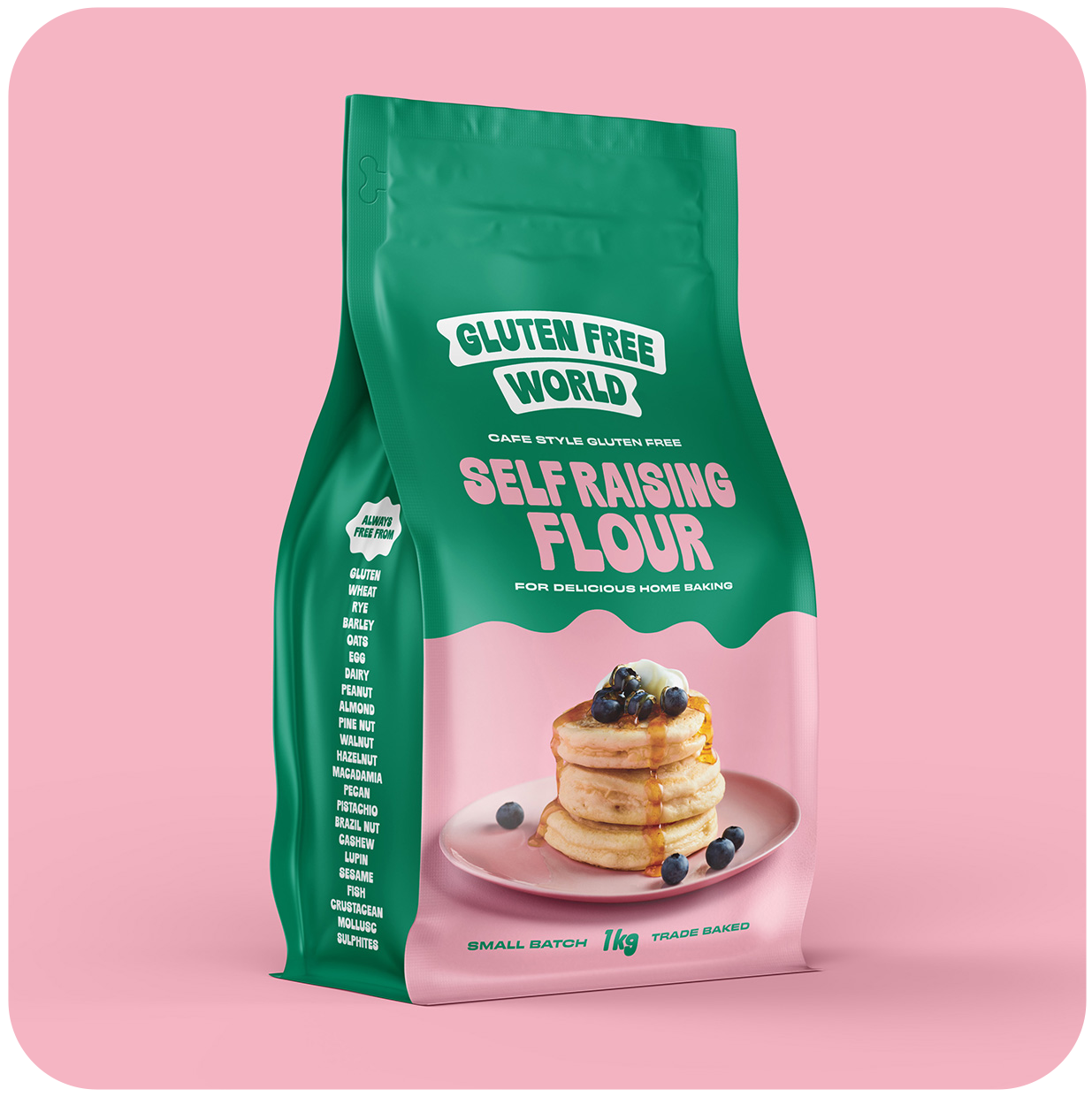
At Gluten Free World, we know that rise is one of the biggest confidence points in gluten-free baking. When your muffins dome, your scones lift, and your cakes bake evenly, it changes how you feel about baking—especially if you’ve had disappointing results before. That’s why we focus on consistency, safety, and dependable performance, so you can trust what happens in your oven.
We also understand that many Aussie households are managing multiple dietary needs. For us, flour isn’t just an ingredient—it’s part of your routine, your celebrations, and your ability to bake safely for the people you love.
Our approach to consistency (so your bakes don’t “randomly” fail)
We aim for predictable performance batch to batch, because inconsistency is where frustration and waste creep in. When you’re baking with gluten free self raising flour, you’re relying on a balanced system: flour blend, raising agent, and the right structure for real recipes. Consistency helps you learn your method and get repeatable results, whether you’re baking for a family treat or a small business order.
We also care about making the product practical for home bakers. Clear expectations and reliable performance help you bake confidently, instead of constantly wondering if it’s “you” or the flour.
Our allergy-aware promise
We support gluten-free, wheat-free baking for people managing coeliac disease and gluten intolerance, and we know many customers also need dairy-free, egg-free, and vegan-friendly options. Confidence matters when you’re baking for sensitive eaters, which is why transparency and careful handling are so important.
How we recommend using our flour for best lift
Great rise isn’t only about what’s in the bag—it’s also about how you use it. We recommend a few simple habits that reliably improve lift and texture: weigh ingredients, mix gently, rest batters where helpful, and bake in a properly preheated oven. These steps make a noticeable difference with gluten free self raising flour, especially in muffins, scones, and pancakes.
If you’re trying a new flour, we always suggest a “baseline bake” first—follow a simple recipe without lots of add-ins. Once you know how your oven and your flour behave together, you can start customising with fruit, spices, and dietary swaps with far more success.
Conclusion
Getting the perfect rise with gluten-free baking is absolutely achievable—it just requires the right combination of flour, freshness, and method. Start by understanding how gluten free self raising flour works, match your technique to the bake (muffins vs scones vs pancakes), and focus on the big levers: accurate measuring, gentle mixing, proper hydration, and consistent oven heat.
If you ever run out, keep a DIY gluten free self raising flour recipe as a backup so you can still bake with confidence. And if your rise isn’t perfect yet, don’t assume you’ve failed—use the troubleshooting cues, make one adjustment at a time, and you’ll get those tall, tender, café-style results that make gluten-free baking feel genuinely joyful.
