Professional-Grade Gluten Free Flours | Vegan & Allergy Friendly | Australia-Wide Delivery


· By R2R Team
Gluten‑Free Pizza Base: Tips for Crisp Edges and Soft Centres
It can be frustrating to bake a gluten-free pizza base, even if you follow the recipe closely. Sometimes the pizza looks great on top but has a soft centre, pale edges, or a base that folds when you slice it.
The good news is that these issues are usually about how the pizza base is prepared and baked, not your skills. Gluten-free pizza reacts differently in the oven, especially with heat, moisture, and toppings.
This guide will show you how to bake a gluten-free pizza base with crisp edges, a soft centre, and a crust that holds together from the first slice to the last. With a few simple changes, gluten-free pizza night can be more predictable and fun.
What a Good Gluten-Free Pizza Base Should Look and Feel Like
A good gluten-free pizza base should be sturdy enough to lift and slice, but not dry or hard. The edges should be crisp and golden, and the centre should be soft and cooked through, not wet or doughy under the toppings.
The base should keep its shape in the oven and rise a little around the edge. When you cut or pick up a slice, the crust should support the sauce, cheese, and toppings without bending or breaking.
For texture, aim for balance instead of brittleness. The base should be pleasantly chewy, easy to bite, and have a flavour that goes well with the toppings. When these parts work together, gluten-free pizza feels familiar and satisfying, not like a compromise.
Preparing the Pizza Base for Crisp Edges and a Soft Centre
How you shape and prepare the base before baking makes a big difference to the final result.
Key preparation tips:
-
Aim for a slightly thinner centre with a slightly thicker edge so the middle cooks through while the edges crisp.
-
Avoid pressing the base too thickly all over, as this traps moisture under the toppings.
-
Shape gently so the base stays even and holds its form.
-
Keep the surface tidy so the base can be lifted cleanly onto a tray, stone, or baking sheet without stretching or tearing.
A well-prepared base helps the oven bake your pizza properly.
Baking Your Gluten-Free Pizza Base the Right Way
Heat is key to a good gluten-free pizza base. A hot oven helps the base set fast, crisp up at the edges, and stay soft in the centre.
For best baking results:
-
Fully preheat the oven before baking.
-
Use a hot tray, baking sheet, or pizza stone to encourage bottom heat.
-
Place the pizza low enough in the oven so the base receives strong heat, rather than letting it brown only from above.
-
Par-bake the base briefly if your oven struggles with heat, then add the sauce and toppings.
Aim for a base that is lightly golden underneath and firm enough to lift before serving.
Common Gluten-Free Pizza Base Problems (and Simple Fixes)
If something doesn’t turn out right, it’s usually easy to fix next time.
Soft or undercooked centre
-
Shape the centre thinner.
-
Use less sauce or wetter toppings.
-
Par-bake the base before topping.
Pale or dry edges
-
Increase oven heat slightly.
-
Bake longer with strong bottom heat.
Base bends when sliced
-
Let the pizza sit for a short moment after baking so the base can finish setting.
-
Before serving, check that the underside is fully cooked and lightly golden, not soft or pale.
Small changes can make gluten-free pizza much more reliable.
How Gluten Free World Helps Make Gluten-Free Pizza Bases Easier
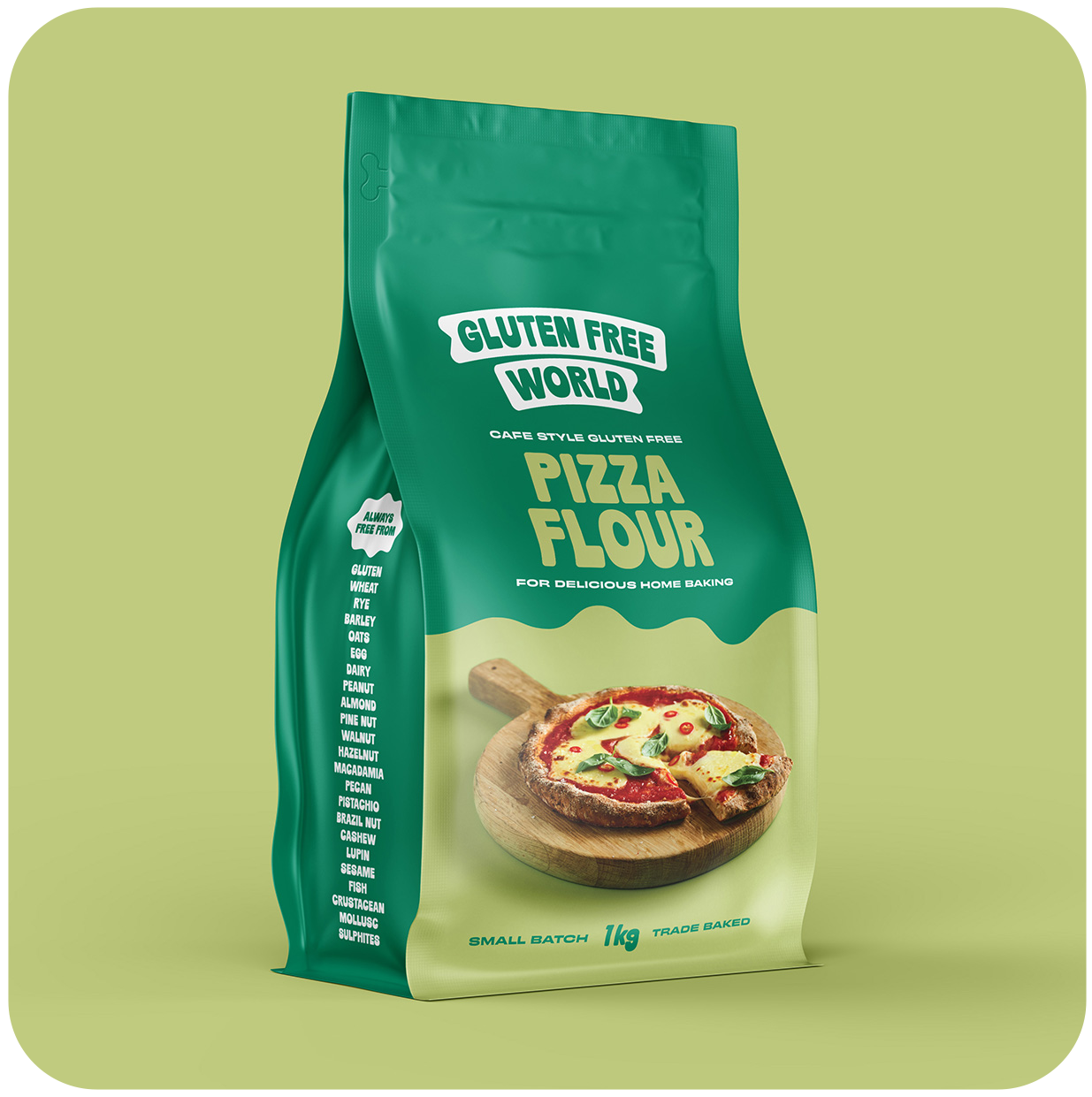
At Gluten Free World, we aim to make gluten-free baking easy for everyday cooks. Our gluten-free pizza flour is made to work well in the oven, so your pizza bases set, lift, and brown more evenly.
By focusing on reliability and balance, our products help your pizza bases have better structure, lift, and browning. This means less guesswork and more confidence when making gluten-free pizza at home.
If you want to learn more about why pizza-specific gluten-free flour works differently, check out our guide on The Best Gluten-Free Pizza Flour: What Makes It Work and Why It’s Different.
Making Gluten-Free Pizza Night Relaxed and Enjoyable
Gluten-free pizza night doesn’t have to be stressful or feel like an experiment. With a clear idea of what a good base looks like and a few simple baking habits, your results will be more predictable.
Focus on progress, not perfection. As you get to know your oven and how your bases bake, gluten-free pizza can become a relaxed routine instead of a challenge. The goal is simple: pizza that looks good, tastes great, and is easy to enjoy together.
Frequently Asked Questions
What is the difference between a gluten-free pizza base and gluten-free pizza dough?
Gluten-free pizza dough is the raw mixture you make by mixing warm water, salt, oil, and a gluten-free flour blend into a dough ball. A gluten-free pizza base is the shaped dough ready to bake, often pressed on a lightly floured surface and prepared for toppings and a crisp pizza crust.
Can I use gluten-free plain flour to make a gluten-free pizza base?
You can use gluten-free plain flour, but results vary. Many gluten-free recipes need a blend of rice flour, tapioca flour, or tapioca starch, plus baking powder or xanthan gum for structure. Plain flour alone can create sticky dough that needs extra flour and careful handling in a hot oven.
Is a gluten-free pizza base the same as gluten-free bread?
No. A gluten-free pizza base is baked flatter and hotter than gluten-free bread to create a crisp crust and raised edge. Bread recipes often use yeast, like active dry yeast or instant yeast, and a longer fridge time, while pizza relies more on bake temperature and texture.
Can a gluten-free pizza base also be dairy-free?
Yes. Most gluten-free pizza bases do not contain dairy. They are usually made with gluten-free flour, warm water, olive oil, and salt. Dairy is usually added with cheese or other toppings, not in the base. This makes it easy to keep the base dairy-free if needed.
Can I make a gluten-free pizza base using buckwheat flour?
Buckwheat flour can be used, but it works best blended with millet flour, tapioca starch, or a gluten-free flour blend for better texture. On its own, it can bake dense. Most gluten-free pizza recipes combine flours to achieve the best pizza taste and crisp finish.
