Professional-Grade Gluten Free Flours | Vegan & Allergy Friendly | Australia-Wide Delivery


· By R2R Team
The Best Gluten-Free Pizza Flour: What Makes It Work and Why It's Different
If you've tried making gluten-free pizza at home, you know how tough it can be. The dough might crack when you stretch it or stick to everything. It often turns out dry, pale, or crumbly, nothing like the chewy, golden pizza you want. If you're used to regular flour, switching to gluten-free pizza flour can feel like learning to bake all over again.
Here's the good news: it's not your fault. Gluten-free pizza dough behaves differently because most GF flour blends simply aren't made for high-heat, high-hydration pizza dough. But when a flour is built specifically for gluten-free pizza, everything changes, from the stretch and texture to the flavour and the whole experience in your kitchen.
So, let's break down what makes a GF pizza flour work, and why ours performs on a completely different level.
Why Gluten-Free Pizza Dough Is So Hard to Get Right
Gluten gives traditional dough its structure and elasticity. Remove gluten, and your dough loses:
-
Stretch
-
Strength
-
Chew
-
Flexibility
That's why most generic GF blends fall apart. Many rely heavily on single starches like rice flour or maize starch, which are perfectly fine in bread or everyday baking, but aren't balanced for the structure and elasticity pizza dough needs. In general-purpose gluten-free flour mixes, the ratios often don't support stretch, even baking, or the ability to hold toppings, all important for a good pizza crust.
You might find yourself sprinkling more flour on a lightly floured surface, adding more water, or trying to knead the dough like wheat dough, but gluten-free pizza dough needs a completely different method.
And that's the point: gluten-free baking is a different science, and pizza is one of the most challenging recipes if your flour isn't designed for it.
What Makes a Proper Gluten-Free Pizza Flour Actually Work
A high-performing GF pizza flour needs to do three things: create structure, hold moisture, and respond well to heat. Many blends use tapioca starch, potato starch, or even buckwheat flour, but the balance matters far more than the ingredients alone.
Here's how that works:
1. The right ingredients mimic gluten
Certain starches and proteins can replicate gluten’s stretch. Some blends use psyllium husk or xanthan gum for elasticity, while others use a combination of gluten-free wheat starch and potato starch to form a dough that behaves like wheat-based pizza dough. The combination, not the ingredient on its own, makes the difference.
2. It absorbs water the right way
GF doughs need warm water to hydrate properly. Without enough hydration, dough balls stay stiff, dry, cold, or sticky. A purpose-made blend will absorb water evenly, letting you stir the dough in a bowl, a mixer bowl, or by hand without frustration.
3. It browns and crisps under high heat
A strong gluten-free pizza flour caramelises under heat, giving you:
-
Golden edges
-
Crispy crust
-
Soft centre
-
Balanced lift (without needing yeast)
This is what gives your pizza base the texture of traditional dough, not just “good for gluten-free,” but good, full stop.
These same properties help when making rotis, chipatis, flatbreads, or quick dinner recipes where you want the dough to roll cleanly and bake evenly.
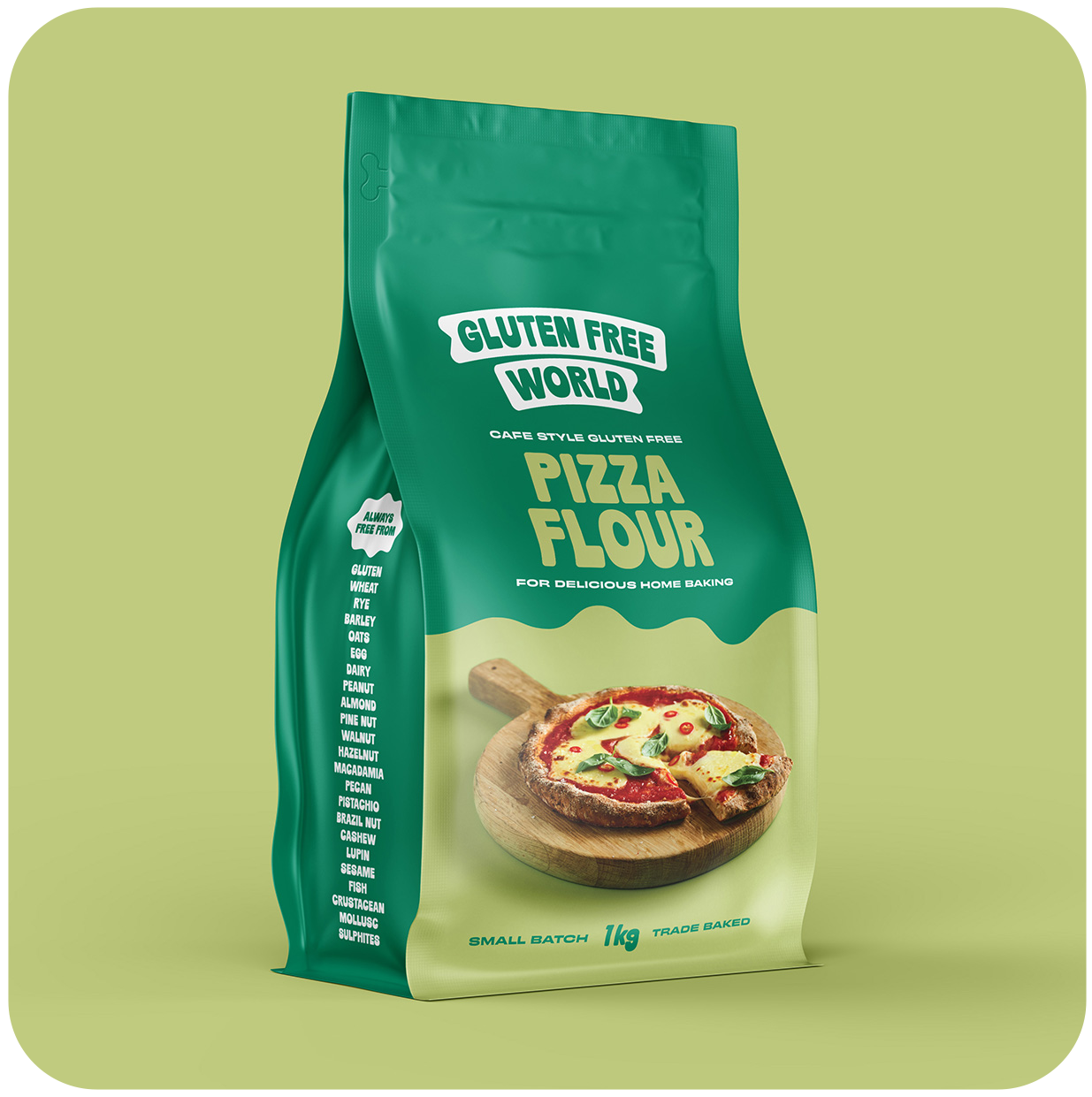
Why Our Gluten-Free Pizza Flour Is Different
Here's where your flour stands out in a crowded gluten-free market.
1. Created by a coeliac chef who actually understands the struggle
Our flour is made in small batches by Paul, a coeliac chef and master baker who genuinely understands the challenge of gluten-free dough. He spent years refining hydration, flavour, and stretchability, not just for pizza, but for all the things people miss eating, like proper bread.
As a result, Gluten Free World engineered a purpose-created pizza flour that handles like the premium blends professionals use in Italy, but crafted locally with Australian ingredients.
2. Triple batch-tested for consistency
Many GF blends vary batch to batch, which affects rise, flavour, and texture.
We test every batch three times to ensure:
-
Even absorption
-
Consistent elasticity
-
Predictable bake
-
Reliable rise
So whether you're shaping dough balls, rolling a base, or dividing the dough in half for smaller pizza crusts, you get the same result every time.
3. Certified gluten-free + dedicated GF facility
Our flour is fully certified gluten-free and made in a dedicated GF facility, meaning no gluten contamination. It contains soy, but no dairy, making it suitable for households managing multiple dietary considerations.
It's safe for coeliac families who rely on strict handling, and safe to store in a cool, dry place alongside your other ingredients without risk.
4. Cafe-grade quality trusted by top Melbourne bakers
Chefs use our blend to make GF pizza crusts that customers mistake for "normal" pizza.
That's the goal: pizza that doesn't feel like a compromise.
5. Designed for pizzas, flatbreads, scrolls, rotis, chipatis, and more
Our flour:
-
Stretches without tearing
-
Holds shape
-
Bakes with lift
-
Creates light, airy pizza crusts
-
Handles well whether you mix by hand or in a mixer
Because it's balanced correctly, you don't need extra xanthan gum or extra oil just to "fix" the dough.
|
Feature |
Generic GF Flour |
Our GF Pizza Flour |
|
Stretchability |
Weak, tears easily |
Flexible, smooth |
|
Texture |
Crumbly or dry |
Soft centre + crisp crust |
|
Oven performance |
Pale, uneven bake |
Golden, pizzeria-style finish |
|
Handling |
Sticky or fragile |
Easy to roll, form, and knead |
|
Rise |
Often inconsistent |
Reliable lift from included raising agents |
|
Toppings support |
Weak structure |
Strong enough for generous toppings |
|
Purpose |
All-purpose |
True pizza flour |
These differences show why a pizza-specific gluten-free flour consistently outperforms generic alternatives.
How to Get the Best Results With Our Gluten-Free Pizza Flour
A few simple steps help your dough form properly and bake into a perfect crust.
-
Use the right hydration: Warm water helps the starches activate and absorb moisture evenly.
-
Mix for 5 minutes (low/med speed): In a stand mixer with the hook attachment (or by hand), mix the dough until it comes together smoothly.
-
Use a hot oven: Bake at 200°C fan-forced or 350–370°C in a pizza oven. You can use a baking tray or pizza stone to achieve an even, crisp base. A pizza peel is helpful for transferring the base in and out of the oven if you're using a stone.
-
If your oven isn't hot enough: Prebake the base without toppings for 10 minutes. This sets the crust and ensures the centre cooks through before you load it up with sauce and cheese.
-
Oil your hands, not your bench: GF dough sticks to surfaces if you flour them too heavily. A small amount of olive oil or extra virgin olive oil works far better.
-
If the dough seems too wet or too dry: Add warm water or more flour in small amounts, as quantity matters. This helps you shape dough balls, divide portions, or roll the base without sticking.
And once baked, your gluten-free pizza bases freeze well; just let them cool completely before storing.
Great Gluten-Free Pizza Is Finally Possible
Good gluten-free pizza isn't about luck; it's about using a flour designed to behave like traditional dough. When your pizza bakes with structure, flavour, a proper crust, and the right balance of stretch, you stop feeling like you're making "gluten-free pizza". You're just making great pizza.
Our gluten-free pizza flour was crafted so every Australian household can bake confidently, with certified gluten-free ingredients, chef-tested quality, and a guarantee of consistency.
Whether you're making a quick dinner, prepping a freezer batch of dough balls, or planning a special pizza night, you'll taste (and feel) the difference from the very first bake.
Frequently Asked Questions
Is Gluten Free World's pizza flour different from regular gluten-free flour?
- Yes. Gluten Free World's pizza flour is formulated specifically for pizza, whereas regular gluten-free flour is a general-purpose flour that doesn't provide the same structure, stretch, or crust texture.
What is the best oven temperature when using Gluten Free World's gluten-free pizza flour?
- The ideal oven temperature is around 200°C fan-forced or 350–370°C (for pizza ovens), which helps the gluten-free pizza crust lift, crisp, and brown properly.
Can you make proper pizza dough using Gluten Free World's gluten-free flour?
- Yes. When mixed with warm water, salt, and olive oil, Gluten Free World's pizza flour forms a workable gluten-free dough that bakes into a proper pizza crust.
What makes Gluten Free World's gluten-free pizza flour a great choice for pizza?
- It’s blended for pizza, absorbing water evenly and creating dough that stretches, holds shape, and bakes with crisp edges and a soft centre.
Is Gluten Free World's gluten-free pizza flour dairy-free or soy-free?
- It contains soy but no dairy, making it suitable for dairy-free diets but not for people with soy allergies.
