Professional-Grade Gluten Free Flours | Vegan & Allergy Friendly | Australia-Wide Delivery


· By R2R Team
Gluten‑Free Bread Flour: How to Get Soft, Springy Sandwich Loaves
Using gluten free bread flour should make sandwich bread simple, yet many gluten-free loaves still come out dense, dry, crumbly, or gummy in the middle. That usually happens because gluten-free dough does not behave like wheat dough. There’s no gluten network to trap gas and hold moisture, so the loaf relies on starches, proteins, and binders to build structure.
This frustrates a lot of home bakers, especially when you’re trying to make everyday bread that actually works for school lunches, toast, or a quick sandwich. A good loaf should feel soft, slice cleanly, spring back when pressed, and hold fillings without breaking apart.
The solution is understanding what creates structure in gluten-free bread and how to use gluten free bread flour correctly. With the right approach, you can bake sandwich loaves that rise well, stay moist, and taste like real bread.
This guide explains exactly how.
Why Softness and “Spring” Are Harder to Achieve in Gluten‑Free Bread

Wheat bread gets its structure from gluten. Gluten traps the carbon dioxide produced by yeast, supports oven spring, and helps the crumb stay elastic after baking. Gluten also helps hold moisture in the crumb, which slows down drying.
Gluten-free bread has to replace that structure using a combination of:
-
Starches that swell and set during baking
-
Proteins that strengthen the crumb
-
Binders that hold water and support elasticity
If any of those pieces are out of balance, the loaf can rise poorly, collapse, bake up gummy, or turn dry and crumbly after cooling.
This is why gluten-free sandwich bread often feels unpredictable, not because you are doing anything wrong, but because the structure-building system is different.
Soft, Springy Gluten‑Free Sandwich Loaves Are Achievable
A good gluten-free sandwich loaf does not require complicated techniques. You need the right gluten free bread flour and a few reliable habits around hydration, mixing, proofing, baking, and cooling.
If you want a classic soft loaf with a neutral flavour profile, start with Traditional Bread Flour.
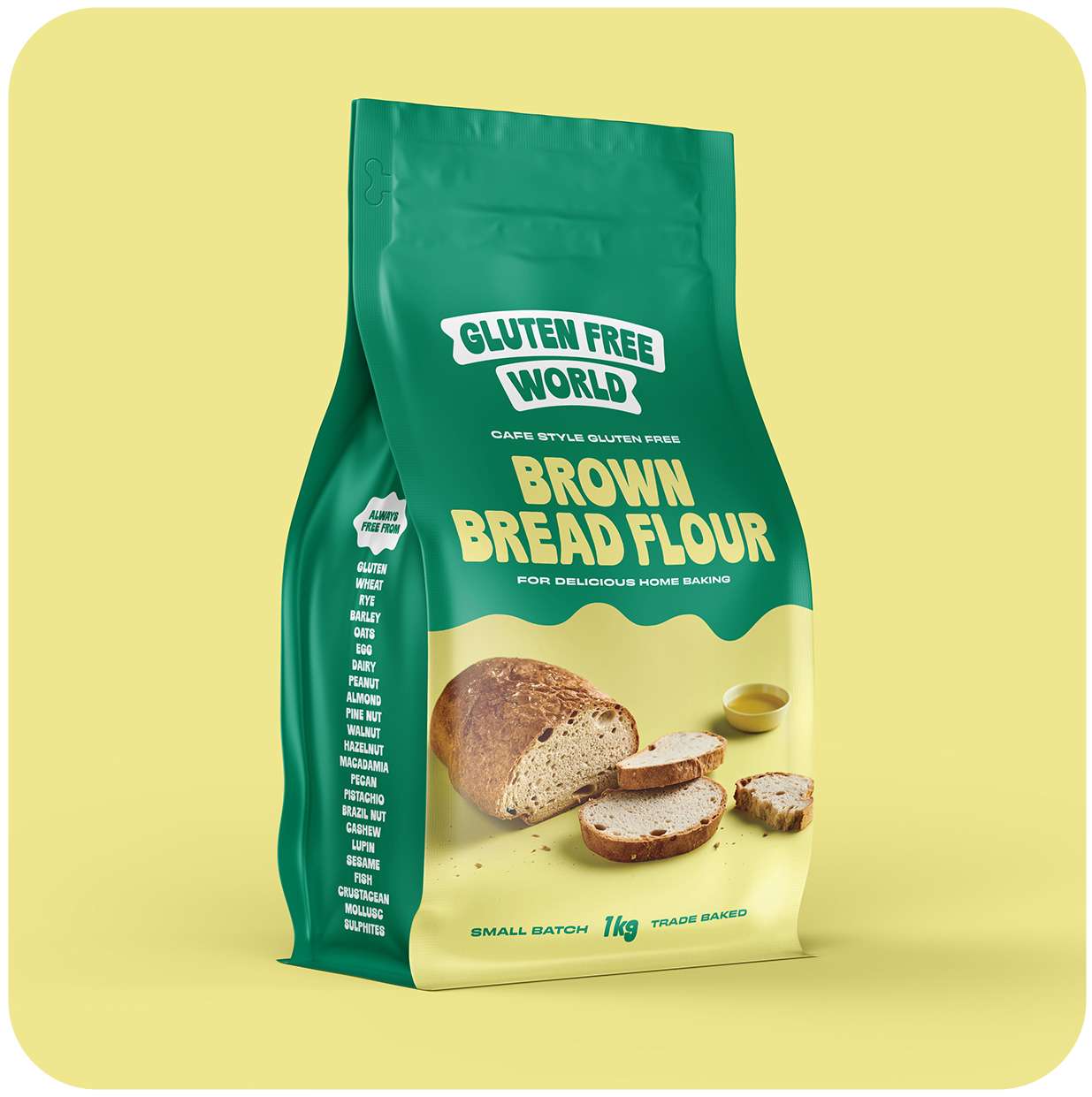
If you want a more hearty loaf with deeper flavour and texture, choose Brown Bread Flour.
Explore both bread flour options and the full flour range here:
https://glutenfreeworld.com.au/collections/all-flours
A Reliable Gluten‑Free Sandwich Loaf Recipe (Works With Both Bread Flours)

If you want a dependable loaf that slices cleanly and holds together for sandwiches, this is a great starting point. The method is simple, the dough comes together quickly, and the bake is designed to set the crumb properly.
Choose your flour:
-
For a lighter, neutral loaf: use Gluten Free World Traditional Bread Flour
-
For a more hearty loaf: use Gluten Free World Brown Bread Flour
Yield and timing (what to expect)
Makes: 10 slices
Total time: about 60 minutes baking + cooling time
Proof time: 30 to 40 minutes
Ingredients of Gulten Free Bread Flour
-
330 g Gluten Free World Traditional Bread Flour or Brown Bread Flour
-
6 g active dry yeast
-
5 g vegetable oil
-
5 g white vinegar
-
450 g warm water
Gluten‑Free Sandwich Loaf Recipe

-
Preheat the oven to 210°C fan forced.
-
Mix the liquids and activate the yeast
- Add the warm water, vegetable oil, and white vinegar to the bowl of a stand mixer. - Add the active dry yeast and whisk until combined.
- Rest for 2 minutes to allow the yeast to begin activating. -
Mix the dough: Add the flour (either traditional bread flour or brown bread flour).
Using the dough hook: -
Mix for 1 to 2 minutes on low speed until combined
-
then mix 8 minutes on medium to high speed until the dough becomes smooth
-
What you’re looking for: a sticky dough that looks cohesive and smooth, not a dry kneadable dough.
-
Shape: Transfer the dough onto a lightly floured board and shape it into a smooth ball.
-
Proof: Place the dough into a bread tin and cover with cling wrap.
Leave in a warm environment for 30 to 40 minutes, or until noticeably risen and slightly domed. -
Bake with steam for better rise and crust: Place an oven-proof dish filled with warm water on the lowest oven rack.
Place the bread tin on the rack above the water and bake for 60 minutes. -
Cool fully before slicing: Turn the baked loaf out onto a cooling rack.
Cool for 1 to 2 hours before slicing. This helps the crumb set and reduces gumminess.
Notes for best results (quick but useful)
-
Warm water should feel warm, not hot. If it’s too hot, it can weaken the yeast.
-
Do not slice early. Gluten-free loaves firm up as they cool. Cutting too soon is one of the fastest ways to get a gummy centre.
-
If your loaf is browning too fast near the end, cover the top loosely with foil for the final 10 to 15 minutes.
Troubleshooting Common Gluten‑Free Sandwich Bread Problems (and How to Fix Them)

Even with a good gluten free bread flour, small changes in hydration, proofing, and baking can change the final texture. If something still goes wrong, here’s what it means and what to do next time.
1. Dry or crumbly loaf
What causes it:
-
not enough water
-
overbaking
-
oven running hotter than expected
-
slicing too early
How to fix:
-
increase water slightly next bake
-
reduce bake time by 5 minutes and check doneness carefully
-
confirm oven temperature with an oven thermometer
-
cool fully before slicing
Prevention: Aim for a sticky dough and bake until the loaf is fully set, then cool completely.
2. Dense loaf with poor rise
What causes it:
-
dough too dry
-
yeast not active
-
proofing environment too cool
-
not enough mixing
How to fix:
-
add more water until the dough is thick but spreadable
-
check yeast freshness and water temperature
-
proof in a warm spot
-
mix longer for a smoother dough
Prevention: Gluten-free bread flour performs best with strong mixing and proper hydration.
3. Gummy centre
What causes it:
-
underbaking
-
too much water without enough bake time
-
slicing while warm
How to fix:
-
bake longer and check internal doneness
-
reduce water slightly next time if the dough was very loose
-
cool fully before slicing
Prevention: Bake until the crumb is set and let the loaf cool completely.
4. Loaf collapses after baking
What causes it:
-
overproofing
-
structure too weak for the rise
-
baking not long enough to set the crumb
How to fix:
-
shorten proof time next bake
-
use a tin that supports the dough
-
bake longer so the structure sets
Prevention: Stop the proof when the dough looks airy and lifted, not when it looks maxed out.
5. Hard crust or edges too dark
What causes it:
-
oven too hot
-
loaf tin too close to the top element
-
baking too long at a high temperature
How to fix:
-
lower the oven temperature slightly
-
bake on the middle rack
-
cover the loaf loosely partway through baking if your oven browns aggressively
Conclusion
Soft, springy gluten-free sandwich bread comes down to a few repeatable basics: the right bread flour, enough hydration, thorough mixing, a controlled proof, a full bake, and a full cool before slicing. Once you know what the dough should look and feel like, gluten-free bread becomes far less unpredictable and a lot more enjoyable to make at home.
If you want a classic, neutral loaf for everyday sandwiches, start with Traditional Bread Flour. If you prefer a more hearty loaf with deeper flavour and texture, choose Brown Bread Flour. When you’re ready to bake, you can shop both bread flours and the full gluten free flour range with us.
Frequently Asked Questions
Which gluten free bread flour is best for sandwich loaves
Both can work well. Traditional Bread Flour suits classic soft sandwich bread. Brown Bread Flour suits a more hearty, wholegrain-style loaf with extra flavour from teff.
Do I need to add xanthan gum when using these bread flours
Usually no. These bread flour blends already include structure-building ingredients, including psyllium and stabilising components. Adding extra binders can make the loaf dense or gummy.
Why does gluten-free bread need more water
Gluten-free bread relies on starch swelling and binders holding water to create structure. Higher hydration supports a softer crumb and better rise, as long as the loaf is baked fully.
Why did my loaf turn gummy even though it looked baked
Most commonly it was underbaked inside or sliced too early. Gluten-free bread needs enough bake time to set the starches, then time to cool fully before slicing.
Can I use Brown Bread Flour for white-style loaves
You can use it for sandwich loaves, but the flavour and colour will be more robust because it includes wholemeal brown teff flour. For a lighter, neutral loaf, Traditional Bread Flour is the better fit.
