Professional-Grade Gluten Free Flours | Vegan & Allergy Friendly | Australia-Wide Delivery


· By R2R Team
Gluten‑Free Plain vs Self‑Raising Flour: When to Use Each (and Why It Matters)
Here's the thing about gluten-free baking.
It does not politely fix your mistakes.
Use the wrong flour and the oven will tell you. Not dramatically. Just enough to make you stare at the cake and think, well… that wasn't what I pictured.
Gluten-free plain flour and gluten-free self-raising flour start from a similar place. What changes is who controls the rise.
And that choice shows up in the final slice.
What Is Gluten Free Plain Flour?

Gluten-free plain flour is your blank canvas.
No built-in lift. No raising agents hiding in the blend. Just the structural base designed to replace wheat flour.
Most plain gluten-free flours combine starches with a protein element and are sometimes added with fibre to support crumb strength.
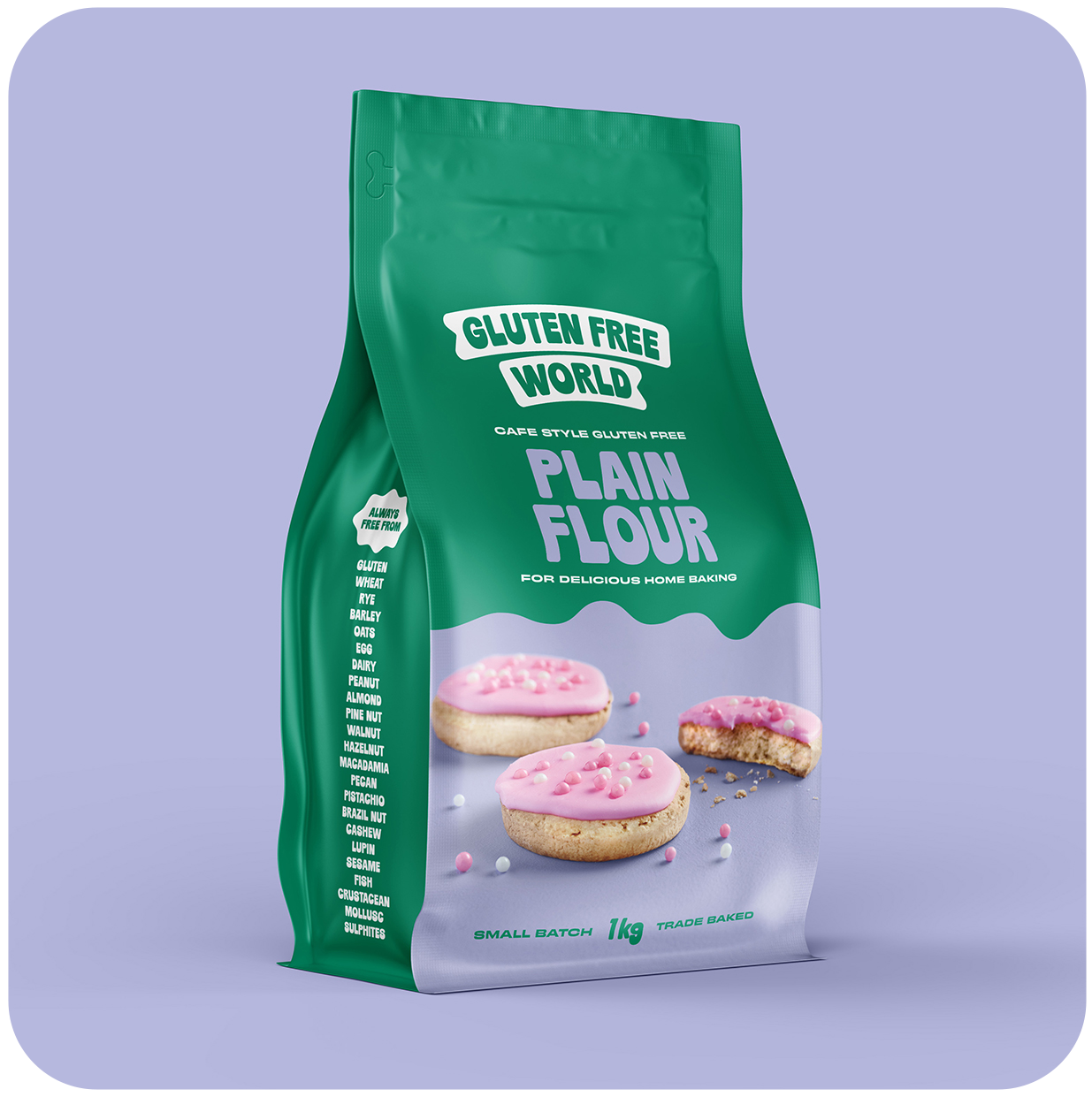
For example, Gluten Free World's plain flour blends tapioca starch, maize starch, rice flour, soy flour and dietary fibre. That's the structure sorted. Nothing added to make it rise.
Which means you're in charge.
You decide how much baking powder goes in. Whether to use bicarbonate of soda. Whether the recipe relies on yeast for a slower rise.
Reach for gluten-free plain flour when you need control:
-
Cakes with carefully measured leavening
-
Cookies that need to spread just enough
-
Pastry and shortcrust
-
Yeast-based breads
-
Recipes you're testing, adjusting or scaling
If you like knowing exactly why something worked, plain flour gives you that clarity.
Still getting your head around gluten-free flours? Start with the basics. Our complete gluten-free flour guide covers what you need to know.
What Is Gluten Free Self-Raising Flour?

Now take that same base blend and add raising agents.
That’s gluten-free self-raising flour.
The structure is similar. The lift is already built in and evenly distributed.
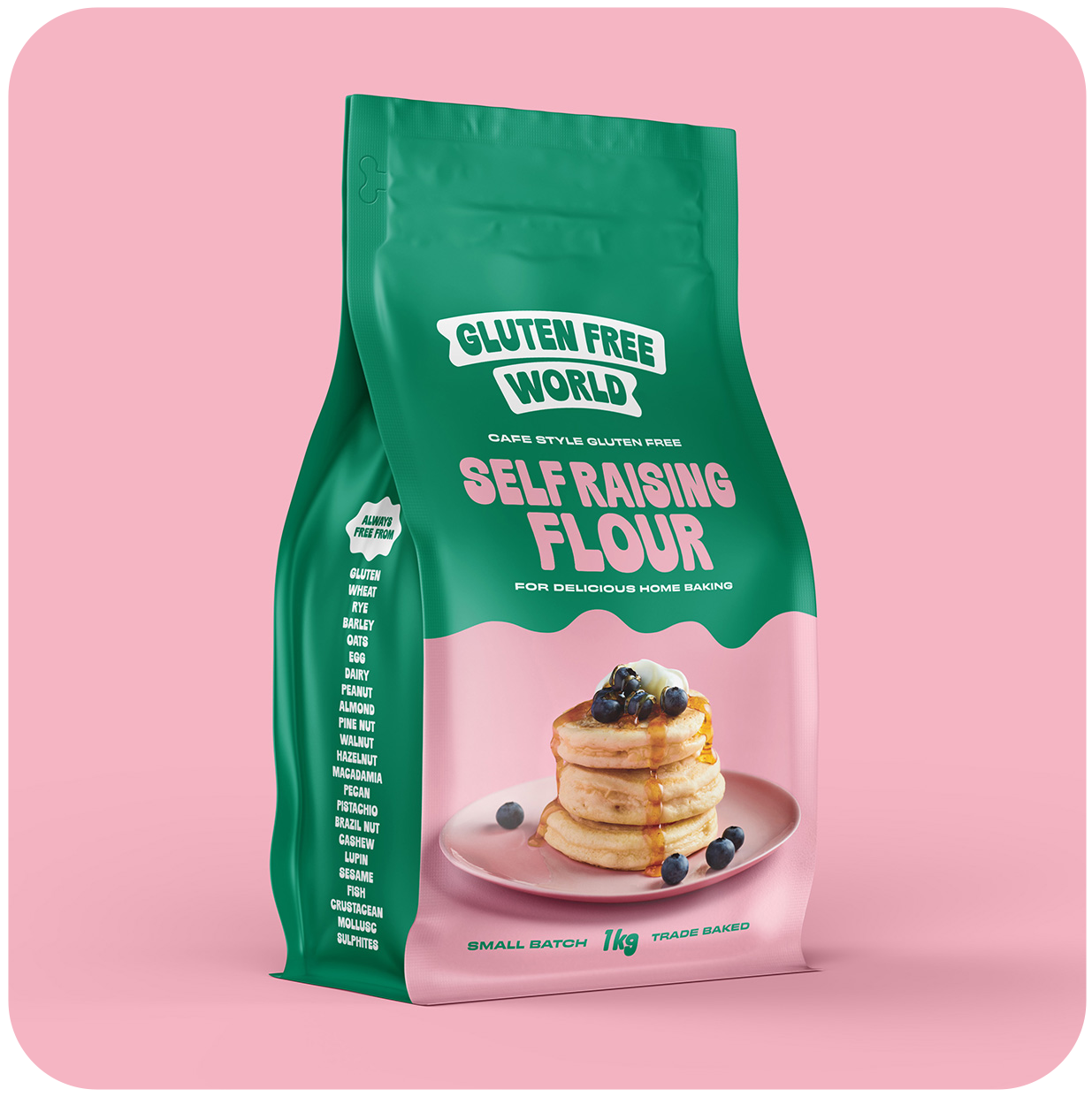
In Gluten Free World’s version, the base blend stays the same and raising agents 575, 501 and 500 are added to provide consistent lift.
You measure. You mix. It rises.
Self-raising flour is ideal for:
-
Muffins
-
Scones
-
Quick loaves
-
Simple sponge cakes
-
Straightforward baking where you do not want to tweak ratios
It removes a step, which is handy on a busy morning or when you just want the recipe to behave.
Just remember, it assumes the recipe suits that level of lift. Add extra baking powder on top, and things can get enthusiastic in the oven.
Want the full breakdown of how self-raising flour is formulated? We cover it in detail in What is Gluten-free Self-raising Flour?
A Quick Comparison: GF Plain Flour vs GF Self-Raising Flour
|
Feature |
Gluten Free Plain Flour |
Gluten Free Self-Raising Flour |
|
Base Blend |
Starches, protein and fibre |
Same structural base |
|
Raising Agents |
None |
Added and pre-balanced |
|
Control |
Fully adjustable |
Fixed level of lift |
|
Flexibility |
High |
Best for standard recipes |
|
Best For |
Pastry, cookies, yeast breads, precision cakes |
Muffins, scones, quick cakes |
|
Common Mistake |
Forgetting to add enough lift |
Adding too much lift |
Why Your Flour Choice Changes the Result
Here's where it gets interesting.
The flour doesn't just sit there holding ingredients together. It controls how the whole thing rises, sets and holds once it cools.
Use gluten-free plain flour, and you're deciding how much push the batter gets. A bit more lift, and you'll see a lighter crumb. Dial it back, and you get something tighter and sturdier. That flexibility matters when you're changing tin sizes, adjusting quantities or adding ingredients that bring extra moisture with them.
Gluten-free self-raising flour takes that decision off your hands. The lift is already balanced into the blend. When you're repeating the same recipe again and again, that built-in consistency is handy. Especially if you're baking in volume and don't want surprises.
But start tweaking the recipe, and the difference shows up.
Add yoghurt. Throw in fruit. Double the batch. GF plain flour lets you adjust to suit, while GF self-raising flour expects the recipe to stay as written.
That's the real distinction.
One gives you control over how the structure develops. The other gives you reliability when the formula stays put.
Neither is dramatic. The question is whether you want the shortcut or the steering wheel.
Not getting the rise you expected? The flour matters, but so does technique. Our guide on How to Get the Perfect Rise with Gluten-Free Self-Raising Flour shows you how to fix it.

Can You Swap Gluten-free Plain and Self-Raising Flour?
You can. Just don't do it on autopilot.
Say you're halfway through making muffins and realise you only have gluten-free plain flour. No problem. Add 2 teaspoons of baking powder per cup (120-150g) of flour, mix it through well, and keep going. Your batter will behave as if it were written for self-raising.
Now flip it.
You're making a butter cake that calls for gluten-free plain flour and added baking powder. The only flour in the pantry is self-raising. That's where you pause.
Because the lift is already in the flour.
So instead of adding the full amount listed in the recipe, you reduce it or leave it out, depending on how much the recipe calls for. Otherwise, the cake can rise fast, look promising, then drop once it cools.
In a home kitchen, that's an annoyance. In a café, that's a full tray you can't sell.
Swapping works. It just needs awareness of where the lift is coming from.
If you're following a fixed recipe, match the flour to what it asks for. If you're adjusting or experimenting, start with plain flour and build from there.
Get the Flour Right First
Before you preheat the oven, check the flour.
That one choice sets the direction for everything that follows. The texture, the rise, and how cleanly it slices once it cools.
Once you know what’s built into the blend, you stop second-guessing. You measure with purpose. You adjust with confidence.
Gluten-free baking isn’t about luck. It’s about understanding what you’re working with.
Start there, and the rest falls into place.
Frequently Asked Questions
Can I swap normal flour for gluten-free flour?
No, not as a straight swap. Wheat flour contains gluten, which gives structure and elasticity, so replacing it one-for-one with gluten-free flour usually changes the texture and rise. For best results, use a recipe written for gluten-free flour, as the liquid and leavening are adjusted to suit the blend.
What is a substitute for gluten-free plain flour?
The best substitute is another gluten-free plain or all-purpose flour blend that doesn’t contain raising agents. If all you have is gluten-free self-raising flour, you can use it, but reduce or leave out any extra baking powder in the recipe so you don’t overdo the lift. Almond flour or coconut flour aren’t direct swaps, as they behave very differently and need recipe changes.
Is gluten-free plain flour good for baking?
Yes, gluten-free plain flour is designed for baking and works well for cakes, cookies, pastry and yeast-based recipes when used in a recipe formulated for gluten-free ingredients. Because it contains no built-in raising agents, it allows you to control the lift and structure of the final product.
How do you make gluten-free self-raising flour at home?
Add baking powder o gluten-free plain flour. A common guide is about 2 teaspoons of baking powder per cup (around 150g) of flour, mixed through evenly. That gives you a quick DIY version when you don’t have GF self-raising flour on hand.
Is gluten-free plain flour the same as all-purpose gluten-free flour?
Usually, yes. “Plain” and “all-purpose” are generally just different names for a gluten-free flour blend without added raising agents, with “plain” more common in Australia and “all-purpose” more common overseas. That said, blends can vary slightly between brands, so it’s worth checking the ingredient list to make sure no raising agents are included.
