Professional-Grade Gluten Free Flours | Vegan & Allergy Friendly | Australia-Wide Delivery


· By R2R Team
Why Self-Raising Flour Makes Better Gluten-Free Pancakes
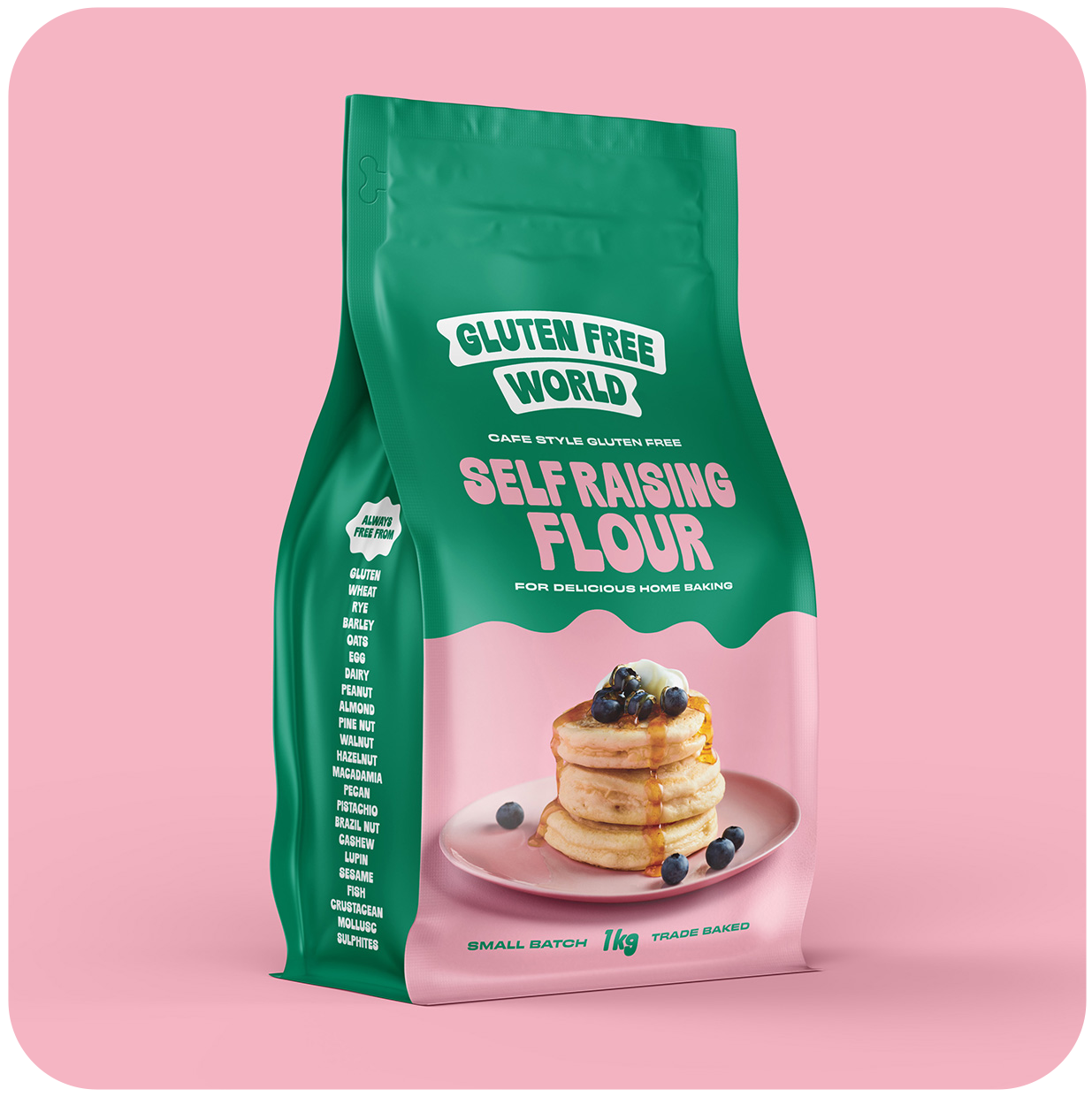
If you have ever made gluten free pancakes and ended up with something flat, dense, or rubbery, you are not alone. What is lacking is nearly always the raising; in other words, how consistently and predictably it will perform in a batter that lacks gluten to bind everything together. It is precisely there that gluten free self raising flour will become your single biggest advantage in the kitchen.
Consider it the secret to thick, Australian-style stacks that support their form, contain a soft crumb, and, in fact, puff instead of deflate like pancakes are supposed to. Be it gluten free self raising flour pancakes on a weekend brunch or a weekday breakfast, it takes the guesswork out of the matter and puts it back in with consistency, every time.
➢ The Goal
The objective is this: get over flat, sticky outcomes and begin making home-cooked, cafe-quality, fluffy gluten free pancakes. Gluten Free World was constructed with this very purpose in mind: to turn baking blends into the creation of the chef, triple-tested, and capable of professional performance without using a professional kitchen. This blog will help you see the science, the technique, and the product choices that make a difference in the pancakes.
Understanding the Science: Self-Raising vs. Plain Flour
Q. What Is Self-Raising Flour?

Self-raising flour is a pre-mixed combination of flour, salt, and raising agents, most often baking powder. It is not only convenient but also precise. Since the raising agent is mixed directly into the flour in the production process, its distribution is the same across all grams of the mix. The sameness of that cannot be reproduced by sprinkling baking powder over plain flour at home, where clumping and mixing unevenly are always a possibility.
➢ The Gluten-Free Challenge
Gluten is a protein structure formed when wheat flour is combined with water. It entraps air bubbles, offers elasticity, and maintains the shape of baked goods. Take gluten out of the equation, and you are taking away the scaffolding that causes a pancake to rise and put itself together.
-
Problem of Gluten Free Baking
This is the main problem of gluten free baking. In the absence of gluten, batters have a challenging time entrapping the gas generated by raising agents. Air has been expelled, the structure has fallen, and all you have is a flat, occasionally sticky gluten free pancakes.
Gluten free self raising flour blends are specially designed to offset this. The lifting agents are allocated in the correct proportion to produce the greatest possible lift, even without gluten, producing the fluffy gluten free pancakes you otherwise would have such trouble replicating at home.
Discover Our Full Gluten Free Product Range
Shop with confidence. See full product info, certifications, and the best Gluten Free Flours for your next bake.
4 Benefits of Using Self-Raising Flour for GF Pancakes
1. Consistent Rise
Professional blends, such as ours, make sure that the baking powder spreads evenly across the flour. This will stop the “dead spots” in the batter where there is no rising agent, which will cause the bubbles to rise unevenly, resulting in a lopsided or thick pancake. When the same number of tablespoons of flour is used to make the cakes, all portions of the pancake will rise equally.
It is the only reason why home bakers who have been using mere gluten free flour can immediately see a visual and textural difference when they change to a gluten free self raising flour blend, before they even change anything in the recipe.
2. Convenience & Speed
A self-raising blend also does away with the problem of having to quantify individual raising agents such as baking powder or bicarbonate of soda. This is important for weekday breakfasts or a weekend stack in a hurry.
Fewer ingredients imply fewer steps of measuring, a reduced possibility of making errors, and a cleaner bench. The whole batter can be prepared within five minutes.
This also minimises the possibility of a very common error: either putting too much or too little baking powder in plain gluten free flour, which will either rise and fall or not rise at all, depriving you of the fluffy gluten free pancakes you were looking to achieve.
3. Superior Texture
When searching for the best gluten free flour for pancakes, protein content matters more than most home bakers realise. Gluten free self raising flour contains less protein than normal wheat flour.
Reduced protein levels translate to a lighter and softer crumb. And this is precisely what you desire in a soft, fluffy gluten free pancake as opposed to a tough and chewy one.
-
Quality
The quality of gluten-free blends also depends on the starch composition. These starches form a moist inside when correctly hydrated and cooked at the correct temperature, without the gumminess that afflicts many gluten-free recipes made at home.
The result is a pancake that is tender yet completely cooked in the middle, with the consistency of café-quality pancakes.
4. Enhanced Structure
Crumbliness is one of the most vexing challenges in gluten-free baking. Batters cannot be flipped or sliced without gluten; they tend to fall apart. A gluten free self raising flour is a product that is well formulated and will deal directly with this.
The combination of raising agents and starches forms a batter that stays together during the cooking process, flips easily, and keeps its shape on the plate. It is no small detail; this is the difference between a pancake that is Instagram-worthy and a pancake that collapses before it hits the table.
How to Use Gluten Free World's Blends for Perfect Pancakes

➢ The Gluten Free World Difference
Gluten Free World blends are triple tested and chef-prepared by Paul, a professional chef who has years of experience in making gluten-free recipes that work. The blends are not merely wheat flour with the gluten removed; they are designed specifically to act as intended both in the home and in the professional kitchen.
That matters because the best gluten free flour for pancakes is not always the cheapest or most widely available option. It is the one that has been tested with an understanding of the behaviour of gluten-free starches in the presence of heat, the effect of raising agents with various ratios of liquid, and how to obtain the lift and tenderness that make fluffy gluten free pancakes worth eating and worth making again.
➢ Substitution Tip
In a recipe that requires plain gluten-free flour and baking powder, you can replace it 1:1 with our gluten free self raising flour and do not add additional baking powder. The right amount of leavening agent has already been mixed in. Extra batter on top will cause the pancake to rise and fall again, leaving a thick, rather bitter product.
This one-to-one replacement rule makes it easy to modify any conventional pancake recipe into a tested and proven gluten free self raising flour pancakes recipe without additional testing.
Pro Tips for Fluffy GF Pancakes Every Time

-
Don't Over-Whisk
Keep the batter slightly lumpy. Excessive mixing will overwork the starches and form a tough or “claggy” texture without the presence of gluten. It only takes a few folds of a spatula or whisk to combine the dry and wet ingredients. The lumps are not a worry; they burn off in the initial couple of minutes in the pan.
-
Let the Batter Rest
Allow the batter a 5- to 10-minute rest period before cooking. This is a resting period that serves two functions. First, it enables the raising agents to begin activating; thus, the lift is already initiated when the batter is struck on the hot pan. Second, it allows the starches in the gluten free self raising flour to hydrate out, contributing to the result and preventing the possibility of a gummy centre.
It is a minor step that does not involve money but time, and it can make a difference in the end product.
-
Temperature Control
Cook on a medium-low heat. Gluten-free flour does not brown the same as wheat flour; it may turn brown on the surface while the interior remains uncooked. The low heat allows the centre time to cook and be cooked through before the bottom becomes overly coloured.
Watch small bubbles form on the surface and then flip. When the edges are established and there are bubbles, then the pancake is ready to roll.
The cleanest flip and the most even cook will be achieved with a small amount of butter or neutral oil in a non-stick pan, which is a non-negotiable when it comes to making gluten free self raising flour pancakes to a cafe standard.
Conclusion
Gluten free self raising flour is the most reliable tool available for producing thick, fluffy gluten free pancakes with consistent results. It addresses the three fundamental issues of gluten-free pancake preparation, namely poor rise, low structure, and uneven texture, by providing optimal distribution of leavening to a low-protein flour mix tailored to the purpose.
The method is important as well: let the batter rest, don't over-mix, and control your heat. However, no such technique is going to make a badly-shaped flour good. In case you are serious about identifying the best gluten free flour for pancakes, you can begin with a mix that has been tested and has been developed specifically for that purpose.
Shop our baking blends from our website and bring the café experience to your kitchen. If you need any clarification related to self-raising flour, contact us today.
Frequently Asked Questions
Can I use plain flour if I don't have self-raising?
Yes, however, you will need 2 teaspoons of baking powder for 125g of plain gluten free flour. Add the baking powder to the flour and mix it thoroughly, then mix it with the wet ingredients. The most frequent reason for inconsistent results of using plain flour as a substitute is uneven mixing at this stage.
Why are my gluten-free pancakes flat?
Expired baking powder, which has lost its lifting ability, or just plain gluten-free flour without sufficient leavening, are the two most common causes of flat gluten free pancakes. A combination of gluten free self raising flour does not have either of these issues since raising agents have already been evaluated and are fresh in each new bag of flour.
Are self-raising pancakes better for crêpes?
No. Thin French-style crêpes should be made with plain flour. The crêpes are meant to be flat and delicate; they need not rise. With a gluten free self raising flour in a crêpe batter, unwanted bubbling will occur, as well as the texture being too thick to suit the style.
Can I make the batter in advance when using self-raising flour?
The batter may be made several hours earlier and kept in the refrigerator; however, it must be baked as quickly as possible. The raising agents start to work and, as time progresses, lose their lifting power as the gluten free self raising flour has been mixed with the liquid.
Overnight batter will give significantly flatter pancakes than immediate or within a few hours of preparation.
Why are my pancakes gummy in the middle?
Gummy centres are nearly always a heating problem. Since gluten free self raising flour makes a pancake that is thicker and fluffier, the centre will need to cook longer before it is cooked through compared to a typical pancake made with wheat flour.
If the pan is too hot, the base browns and sets before the middle has had time to rise and cook. Lower the temperature to medium-low, and increase the time cooked a little, then wait until bubbles appear on the surface, and then turn.
