Professional-Grade Gluten Free Flours | Vegan & Allergy Friendly | Australia-Wide Delivery


· By R2R Team
No-Yeast Gluten-Free Pizza Dough: When to Use It (and When to Avoid It)
Yeast-free pizza dough is often promoted as the fastest way to make homemade pizza. There is no rise time, no proofing, and no fermentation to manage. You mix, shape, and bake.
When it works, it feels effortless.
When it doesn’t, the crust can turn pale, dense, or too fragile to hold toppings.
The difference comes down to structure. Without gluten or fermentation, the flour must create strength and stability on its own. If the blend isn’t designed specifically for pizza, results can be inconsistent.
This guide explains when a no-yeast method works beautifully, and what separates a crisp, dependable base from a disappointing one.
What Most Yeast-Free Pizza Dough Recipes Get Wrong
Traditional wheat pizza dough relies on gluten for stretch and yeast for fermentation. As yeast works through the dough, it creates air bubbles. Gluten traps those bubbles, giving the pizza crust its chew and structure.
In gluten-free baking, that network does not exist. Structure has to come from the way starches absorb water, how the dough is hydrated, and how the binders hold everything together.
Many no-yeast pizza dough recipes try to fix this by adding extra baking powder or baking soda to a general gluten-free flour blend. While this can create lift, it produces fast chemical aeration instead of gradual development. The result is often a soft, cake-like base rather than a proper pizza crust.
This is where many recipes fail. A standard pizza dough recipe or pizza crust recipe written for wheat flour does not always translate well to gluten-free flour. Without the right balance, the dough can spread too much, stay pale in a preheated oven, or struggle to hold pizza sauce and toppings.
Yeast-free pizza dough itself is not the problem. The issue is using a flour blend that was not designed for pizza performance. A purpose-built gluten-free flour creates lift, structure, and colour without needing added yeast, baking powder, or baking soda.
When the raising agents are already balanced within the blend, the dough sets properly in the oven and holds its shape under toppings.
Discover Our Full Gluten Free Product Range
Shop with confidence. See full product info, certifications, and the best Gluten Free Flours for your next bake.
When a Yeast-Free Gluten-Free Pizza Dough Works Best
A yeast-free pizza dough works best when speed and simplicity matter more than fermentation flavour. If you want homemade pizza on the same day without waiting for the dough rise, this method is ideal.
It suits weeknight cooking, beginner bakers, and anyone who prefers a direct process. There is no need to manage yeast dough, resting time, or proofing stages. You mix, shape the dough, and bake.
This method works especially well for thin to medium pizza crust styles. It is less suited to thick or deep pan bases.
To prepare the dough:
-
Combine the gluten-free flour blend with water and olive oil in a large bowl. Extra virgin olive oil adds better flavour, but regular olive oil works too. Mix by hand or use a dough hook attachment until the dough comes together.
-
Place the dough onto parchment paper. Lightly oil your hands with vegetable oil if needed and shape the dough into a round. You can press it outward with your hands or use a rolling pin for an even base.
-
Transfer to a baking sheet, pizza pan, or preheated pizza stone. Bake in a preheated oven until the crust turns golden and the edges feel firm to the touch.
-
Once baked, add pizza sauce, parmesan cheese, and your favourite pizza toppings. Serve immediately for the best texture.
This approach delivers a reliable pizza crust without the extra steps of a traditional yeast pizza dough recipe. It keeps the process simple while still producing a delicious pizza.
A Quick Comparison: No-Yeast vs Yeasted Gluten-Free Pizza Dough
| Feature | No-Yeast Gluten-Free Dough | Yeasted Gluten-Free Dough |
|---|---|---|
| Prep time | Fast. Mix and bake. | Requires proofing time. |
| Rise stage | None | Requires rising or fermentation |
| Flavour development | Mild and clean | Deeper, more developed flavour |
| Texture | Slightly denser and crisper | Lighter, airier crumb |
| Chew | Moderate | More traditional chew |
| Best for | Weeknight pizza and quick service | Artisan-style pizza and weekend baking |
| Skill level | Beginner-friendly | Requires timing control |
| Topping load | Works best with moderate toppings | Handles heavier toppings more easily |
| Ideal setting | Home cooks and cafés with tight turnaround times | Slower service and flavour-forward menus |
When to Avoid Generic No Yeast Pizza Dough
No-yeast dough isn't the best option for every pizza style.
You may want to avoid it when:
-
You're aiming for a light, airy, fermented crumb
-
You prefer a strong chew with visible air pockets
-
You're making thick or deep-dish bases
-
You want the dough to rest and develop flavour over several hours
No-yeast dough won’t develop the flavour that comes from long fermentation, and it’s not meant to. A well-formulated pizza flour can still deliver stretch, strength and a crisp base without yeast when the balance of starch, protein and hydration is right.
Different method, different style. It comes down to the kind of pizza you feel like making.

Why Flour Design Matters More Than Yeast
In gluten-free pizza dough, the way the flour behaves under heat is more important than whether yeast is used.
When the dough goes into a preheated oven, several things happen at once. Starches absorb water and swell, helping the pizza crust firm up and hold its shape. Binders in the gluten-free flour blend create cohesion so the dough does not crumble. At the same time, moisture evaporates from the surface, forming a crisp outer layer that develops colour and turns golden brown as it cooks.
If the blend is not balanced correctly, the dough may spread too much on a baking sheet or pizza pan. It can remain pale, feel dense in the centre, or struggle to support pizza sauce and pizza toppings across the whole pizza.
A pizza-specific gluten-free flour is designed to respond to oven heat in a controlled way. When the formulation already includes balanced raising agents, the dough lifts in the oven without added yeast, baking powder, or baking soda. It sets quickly, supports toppings evenly, and produces a tender crust with crisp edges.
Discover Our Full Gluten Free Product Range
Shop with confidence. See full product info, certifications, and the best Gluten Free Flours for your next bake.
Yeast-Free Pizza Works When the Flour Is Right
Yeast-free pizza dough is not a shortcut. It is simply a different way to make pizza.
The key is starting with a flour that is designed to do the work for you. Gluten-free pizza flour is formulated as a complete base, with carefully balanced raising agents built in. There is no need to add yeast, baking powder, or baking soda.
This means you can mix with water and olive oil, shape the dough, and bake with confidence. The crust lifts in the oven, holds its structure, and supports your favourite toppings without collapsing.
With the right blend, no-yeast gluten-free pizza dough becomes simple, consistent, and reliably no-fail.
For a deeper look at dough stretch, structure, and flour selection, explore:
Frequently Asked Questions
Can you make homemade pizza dough without yeast?
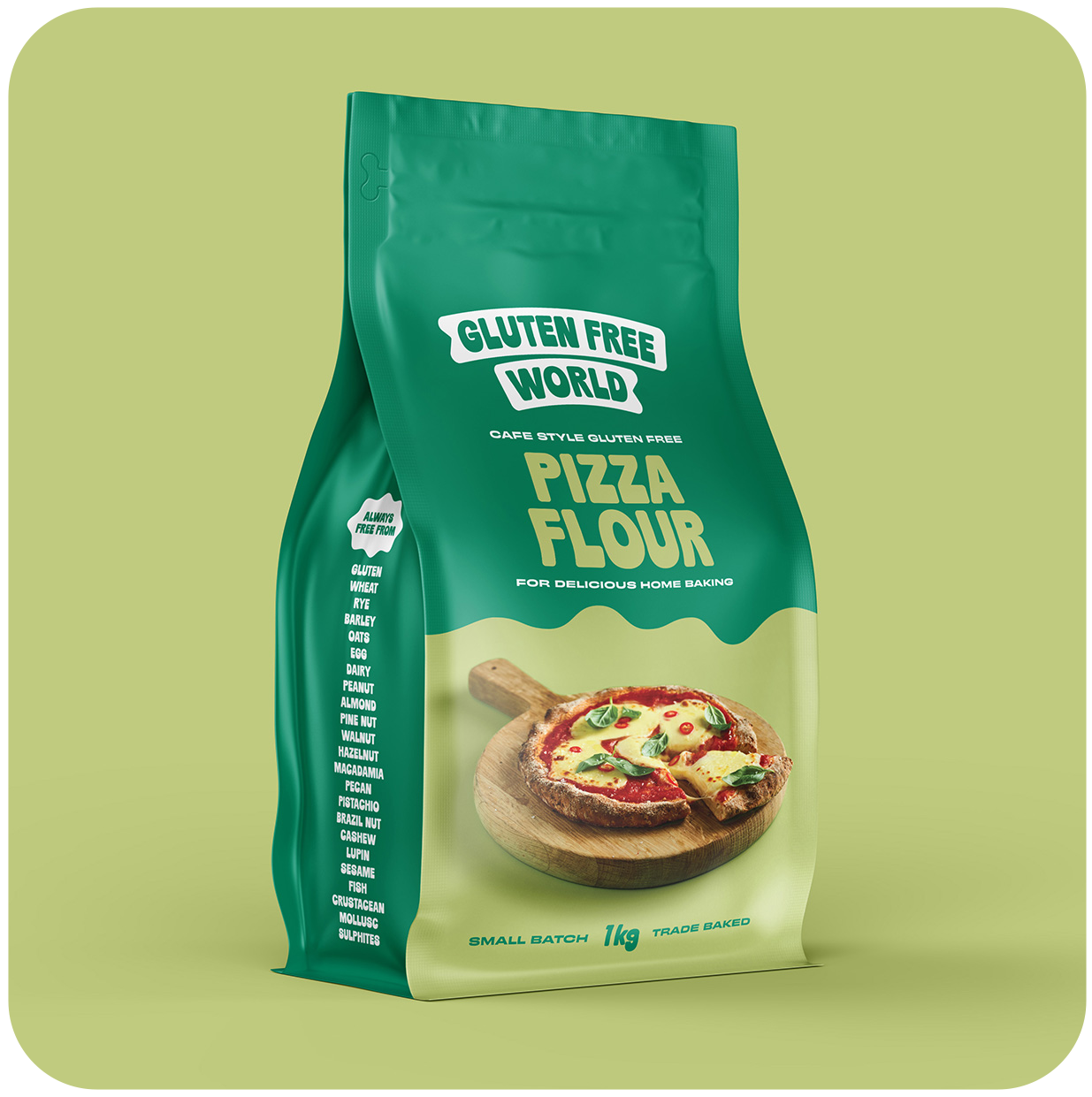
Yes. When you use a purpose-designed pizza flour like Gluten Free World’s, the raising agents are already balanced within the blend. They activate in a preheated oven, providing lift and structure without fermentation.
Do I need baking powder or baking soda?
No. Gluten Free World’s pizza flour is formulated as a complete mix, so extra baking powder or baking soda is not required. Adding more can disrupt the balance and affect the final texture.
How do you shape the dough without yeast?
After mixing with water and olive oil, the dough should feel soft but workable. Shape the dough directly on parchment paper and gently press it outward with your hands or a rolling pin. Lightly oiling your hands with vegetable oil helps prevent sticking without drying them out.
Will it hold toppings across the whole pizza?
Yes. When baked properly, the crust develops enough structure to support sauce, cheese, and toppings across the whole pizza without collapsing. Bake until fully cooked and serve immediately for the best texture and stability.
Can I brush the edges before baking?
Yes. Lightly brushing the edges with olive oil or melted butter before baking helps encourage browning and adds flavour. It’s a simple step that enhances colour and gives the finished crust a richer, more appealing finish.
